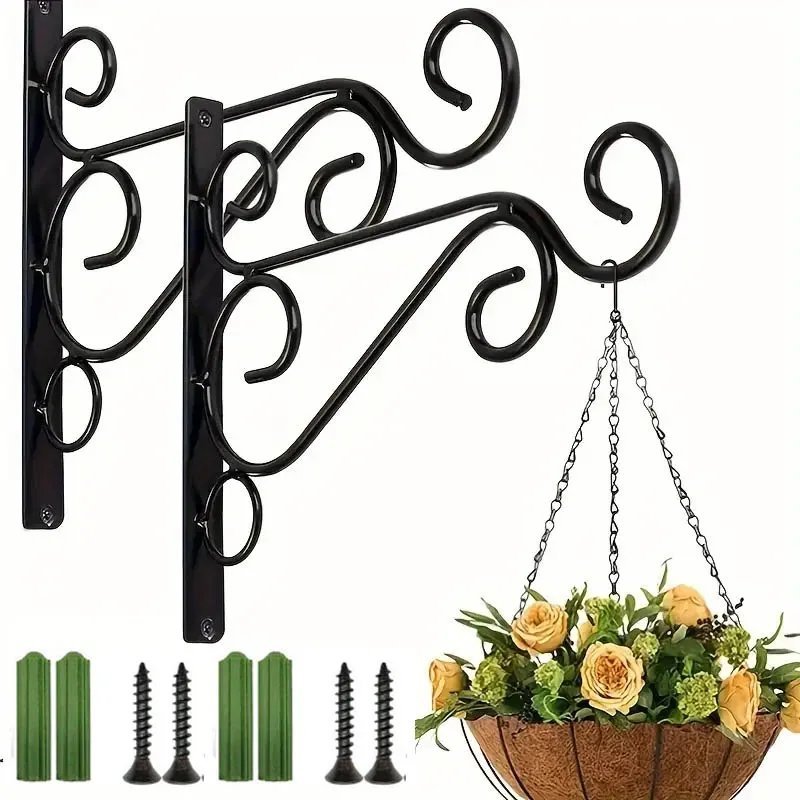
Large usually means 40cm and upward across the rim. The extra size gives a fuller display and holds water longer, but a big basket watered is heavy enough that the bracket, the wall and the fixings all have to be chosen for it rather than assumed.
People buy a big basket for the impact and then discover the interesting part is what is holding it up.
What the sizes actually mean
Basket size is quoted across the rim, and the common steps are 30cm, 35cm and 40cm and up.
30cm is a balcony or a small porch size - light, easy to hang, dries out quickly.
35cm is the everyday all-rounder and what most people should buy first.
40cm and up is the statement size, usually beside a front door or on a substantial wall - the large range covers those and the small range the other end.
Why bigger is not simply better
Two things change and only one of them is good.
Better: more compost means more water held, so a big basket dries out more slowly than a small one and looks fuller for longer. It is also more forgiving of a missed day.
Worse: weight. Compost and water are heavy, and a large basket fully watered is a genuinely substantial object hanging above head height.
The fixing has to be chosen for it
This is the part that matters and the part people skip.
Work from the watered weight rather than the empty weight, choose a bracket rated comfortably above it, and check what you are fixing into. Solid masonry takes a proper plug and screw; render over blockwork behaves differently; and a fence post or a timber wall is a different job again.
Heavy-duty brackets exist precisely for this, and the fixings guide covers fitting them - the brackets guide goes into the sizing.
Bracket reach matters too
A bracket has to project far enough that the basket hangs clear of the wall. Too short and a big basket rubs against the brickwork, which flattens one side of the display and wears the basket.
As a rough rule the bracket wants to reach out to a bit more than half the basket's diameter, so a 40cm basket needs noticeably more projection than a 30cm one. Check that before buying rather than after.
Where big works
Beside a front door, where there is room for it to be seen properly. On a large blank wall that can take the scale. In a pair, flanking something - two large baskets either side of a door reads as deliberate in a way one does not.
Where it does not work is a narrow passage you walk through, a low porch where you would duck under it, or a fence panel that will flex under the weight.
Getting it down to water
A serious practical point with a big basket. Lifting a heavy watered basket off a bracket above head height is awkward and is how people drop them.
Two solutions. A pulley hook lowers the basket to you and takes the lifting out entirely - a retractable pulley does that. Or a long-spout can lets you water in place - the watering range covers both.
Filling a big basket
The cost people do not budget for. A 40cm basket takes a lot of compost and a lot of plants to look full, and a large basket planted sparsely looks worse than a small one planted well.
Plan for more plants than feels reasonable, and remember we sell the basket and the liner rather than the plants themselves - those come from a nursery - the planting guide covers filling one.
Or fill it with artificial
A big basket is where artificial displays make the most sense, because the weight and the watering are the two problems large baskets have, and a faux display has neither.
It also stays full-looking all year, which is exactly what people want from a statement basket by a door - the artificial range covers them and the purple trailing set is a fuller one.
Two large baskets or four small
A question worth asking before buying, because the answer is not obvious.
One large basket beside a door has presence and reads as deliberate. Four small ones along the same wall give more interest and spread the weight across four lighter fixings, which on a fence or a questionable wall is a real advantage.
The large basket wins where there is one obvious focal point. The small ones win where there is a run of wall and nothing to centre on - the small range covers those.
Materials at size
Metal wire frames are strong and light for their size, which is why most large baskets are wire. Plastic is lighter still and less rigid at scale. Wicker and rattan look best and are the heaviest before you add anything - the buyer's guide compares them.
Buying one
Buy the bracket at the same time as the basket, sized for it, rather than hoping the one already on the wall will do. Free UK delivery over £20, £5.99 below, and 30 days to return anything with the postage paid - the returns page has the terms.
The short version
- Size is measured across the rim: 30cm balcony, 35cm everyday, 40cm+ statement.
- Bigger holds water longer and weighs a great deal more when watered.
- Choose the bracket from the watered weight and check what you are fixing into.
- A bracket must reach out past half the basket's diameter or it rubs the wall.
- Big baskets are where artificial displays make most sense - no weight, no watering.
Frequently asked questions
What counts as a large hanging basket?
Usually 40cm and upward measured across the rim. Below that, 35cm is the everyday all-rounder most people should buy first and 30cm suits a balcony or a small porch.
Is a bigger basket better?
Partly. More compost holds more water, so it dries out more slowly and is more forgiving of a missed day. The trade-off is weight - a large basket fully watered is a substantial object above head height.
What bracket do I need for a big basket?
One rated comfortably above the watered weight, fixed appropriately for your wall type, and long enough to hold the basket clear. As a rough rule the reach wants to exceed half the basket's diameter.
How do I water a large basket safely?
Either a pulley hook, which lowers the basket to you and removes the lifting entirely, or a long-spout can so you can water in place. Lifting a heavy watered basket down from above head height is how people drop them.
Why does my big basket look sparse?
A 40cm basket needs considerably more planting than feels reasonable to look full, and a large basket planted sparsely looks worse than a small one planted well. Budget for more plants than you expect.