Look for genuine drainage, a rim strong enough not to distort under a watered load, chains and a hanging ring rated for the weight, a powder-coated or galvanised finish, and stated dimensions including depth. Depth matters more than diameter and is the figure most often left out.
Baskets look much the same in a listing and behave very differently after two seasons outdoors. These are the things worth checking first.
Drainage
The first check, and it applies to artificial displays too, because rain still falls into them.
An open frame drains by design. A solid pot needs actual holes rather than moulded dimples that were never punched through. A basket that holds water freezes in winter, goes sour in summer and weighs far more than it should.
Depth, not just diameter
The figure most often missing and the one that decides how a basket performs.
Two 35cm baskets can hold quite different volumes of compost depending on depth, and compost volume is what determines how often you water and how many plants it supports - the plant numbers guide covers that relationship.
The rim
Where cheap baskets fail first. A watered basket puts real outward pressure on the rim, and a thin one distorts into an oval over a season.
Look for a doubled or rolled rim on wire baskets, and a reinforced lip on plastic ones. A distorted rim also stops liners fitting properly the following year.
Chains and the hanging ring
Frequently the weakest component in the whole arrangement, because it is the cheapest.
Check the chain gauge, that the hooks at each end close properly, and that the top ring is welded rather than simply bent round. A ring that can open under load is the failure nobody anticipates - the chains range covers replacements.
Three chains or four
Three is standard and hangs level readily. Four spreads the load slightly better on a large basket but needs more care to hang without twisting - the chains range covers replacement sets.
Either works. What matters is that they are all the same length, which is worth checking rather than assuming.
Finish
Powder-coated and galvanised outlast painted finishes by a wide margin outdoors.
Painted wire chips during planting and rusts from the chip outward. If a listing does not say what the finish is, that is usually informative in itself - the hooks range faces the same weather.
Weight, empty
Matters on a doubtful fixing. Plastic is lightest, coated wire next, wicker heaviest before anything goes in.
Once planted and watered the compost dominates, so this is really about the starting point rather than the total - the brackets guide covers working out the load.
Whether it takes a liner
An open frame needs one, and liner availability in that size is worth checking before buying an unusual shape.
Round liners are easy to source; cone and half-basket shapes less so. A round coco liner can be cut down, but a basket you can buy liners for saves that job every year - the liners range covers sizes.
Side planting
If you want a full ball of flowers rather than a bowl, the basket has to allow planting through the sides.
Wire and open frames do; solid pots do not. This single feature is the biggest difference between a professional-looking basket and a home one - the planting guide covers the technique.
UV stability
For plastic baskets and any artificial display, this is what decides whether it still looks right in three years.
Untreated plastic goes chalky and faded, and cheap plastic can go brittle in hard frost - the outdoor artificial guide covers the same point for displays.
Stated dimensions, honestly given
Diameter measured at the rim, depth, and for artificial displays the overall length including the trail.
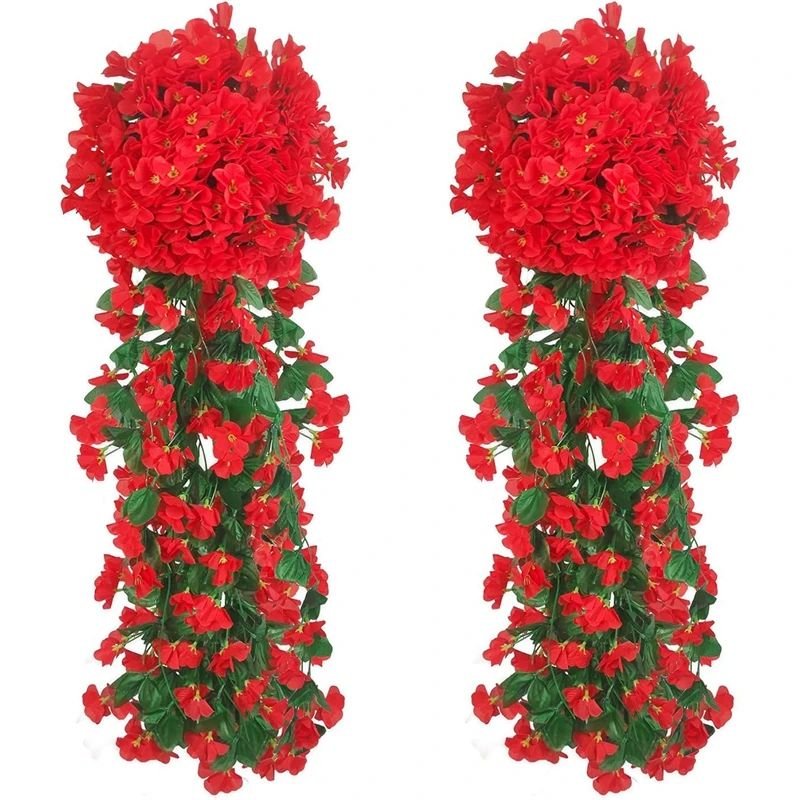
Trail length is the dimension that decides how a faux display reads on a wall, and it is left out far more often than it should be.
Photographs that show it hanging
A basket photographed flat, from above, in a studio tells you very little. One photographed hanging, in daylight, tells you how it actually sits.
This matters most for artificial displays, where the difference between the two views is largest.
Matching the bracket at the same time
Buy them together. Bought separately, the diameter becomes a memory and the reach ends up guessed, which is the commonest mistake in the whole subject.
The brackets range and the hooks range cover the fixing side.
Returns, and judging it at home
Worth knowing before ordering, because several of these checks are far easier with the basket in your hands than in a photograph.
Rim stiffness, chain gauge and the weight of the whole thing are all things you assess in a second in person and guess at online. Hang it empty where it is going and look at it before planting anything into it.
We give 30 days, refund in money rather than credit, and pay the return postage - the returns page has the terms.
What we would check first
Drainage, rim strength, chain and ring quality, then depth. Those four predict how a basket ages better than price does.
The buyer's guide covers choosing across the whole range, with free UK delivery over £20 and 30 days to return anything.
The short version
- Check drainage first - artificial displays need it too, because rain still falls in.
- Depth decides compost volume and is the figure most often left out of a listing.
- A thin rim distorts into an oval under watered load and then liners stop fitting.
- The hanging ring should be welded, not bent round - it is the cheapest part.
- Side planting is the single biggest difference between a ball and a bowl.
Frequently asked questions
What should I check before buying a hanging basket?
Drainage, rim strength, the chains and hanging ring, and the stated depth rather than just the diameter. Those four predict how a basket ages considerably better than the price does.
Why does depth matter more than diameter?
Because compost volume is what determines how often you water and how many plants the basket supports, and two baskets of the same diameter can hold quite different volumes depending on depth.
What usually fails first on a cheap basket?
The rim, which distorts into an oval under the outward pressure of watered compost, and the hanging ring if it is bent round rather than welded. A distorted rim also stops liners fitting the next year.
Do artificial baskets need drainage?
Yes. Rain still falls into them, and a display packed into a sealed base holds water that freezes in winter, encourages algae and makes the whole thing heavier than it needs to be.
Should I buy the bracket at the same time?
Yes, and it avoids the commonest mistake in the subject. Bought weeks apart, the basket diameter becomes a memory rather than a measurement and the bracket reach ends up guessed.