Quick answer: Flowers are the hardest part of an artificial display to make convincing, because real petals vary in colour and sit at different stages. Choose displays with tonal variation, some buds among the open flowers, and far more foliage than flower - a real basket is mostly green.
Faux foliage passes at two metres almost every time. Faux flowers are a different problem, and the difference is worth understanding before you buy.
Why flowers are harder
A real leaf is fairly uniform. A real flower is not - the petals vary in tone across a single bloom, they fade at the edges, and no two flowers on a plant are at the same stage.
Cheap artificial flowers are moulded identical and coloured flat, so a basket of them reads as a repeating pattern. The eye picks that up immediately even at distance.
The three things to look for
Tonal variation within a single flower - a deeper throat, paler edges, some shading. Flat single-colour petals are the giveaway.
Buds and part-open flowers mixed with open ones. A real plant is never all in full bloom at once, and a display that is looks staged.
Petal material. Fabric petals catch light the way real ones do; hard moulded plastic reflects in a way nothing living does - the artificial guide covers judging quality.
Get the ratio right
The single most common mistake in artificial floral baskets, and it is one people make themselves when building a display.
A real flowering basket is mostly green. Foliage carries the volume and flowers punctuate it. Artificial displays are often sold flower-heavy because flowers photograph better, and the result is a solid ball of blooms that no living plant has ever produced.
Aim for foliage dominant with flower coming through it, not the reverse - the ready-to-hang range is balanced that way already.
Colour choices that read as real
One or two colours, not five. A real basket is usually one variety or a considered pairing, and a display containing every colour available announces itself.
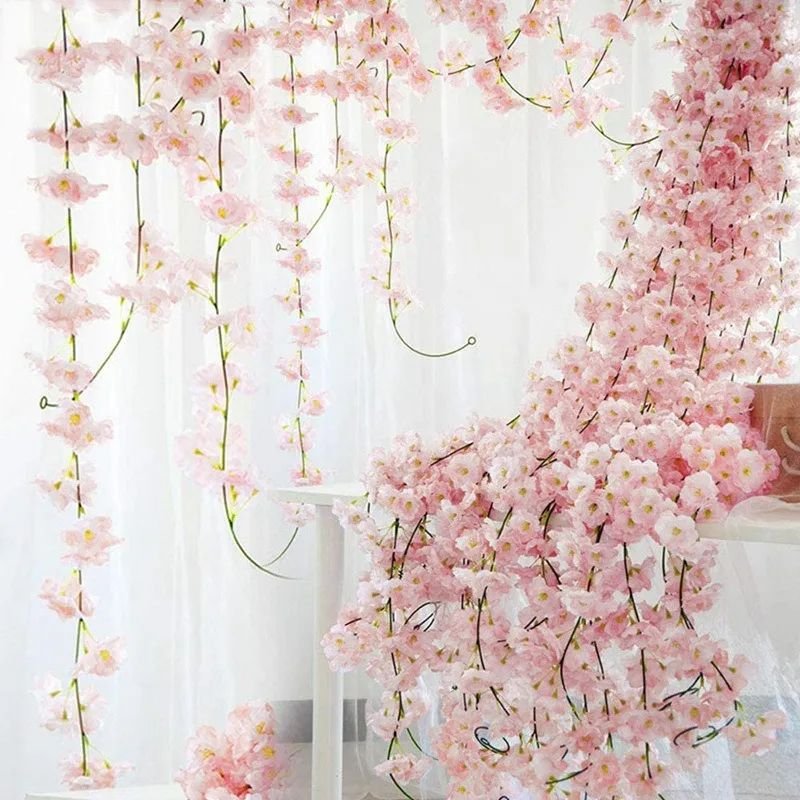
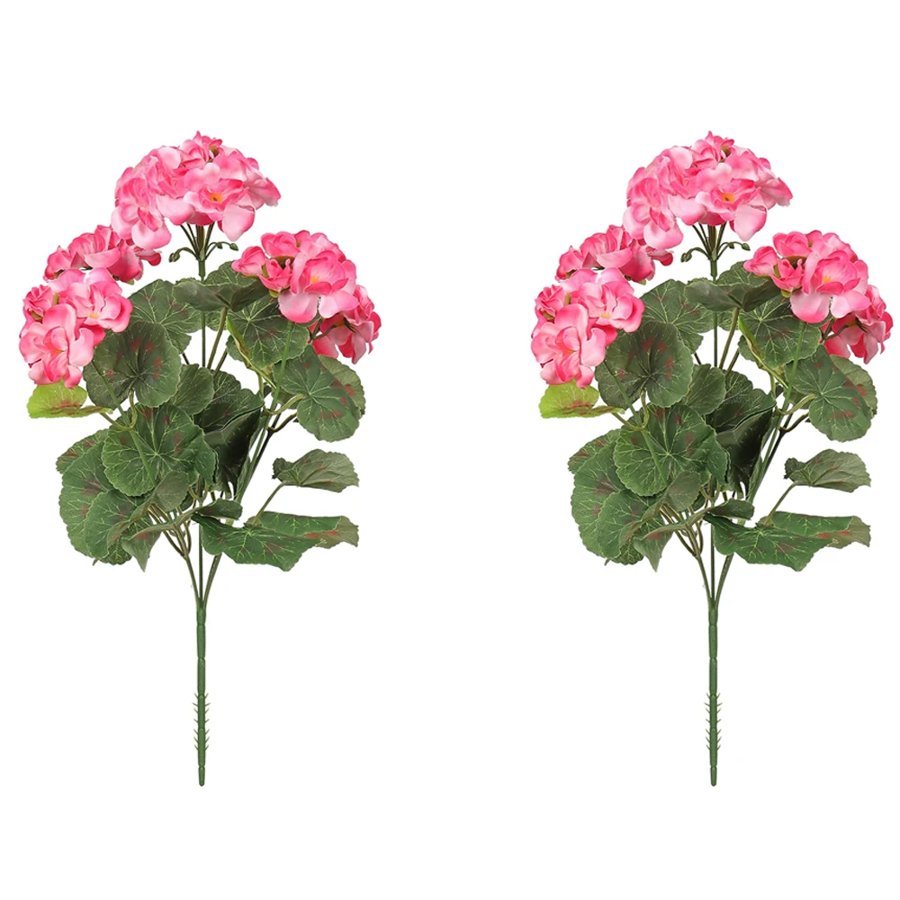
Softer and slightly muted tones read better than saturated ones, because real flowers outdoors are always slightly weathered by light - the artificial flowering range covers stems and bunches.
Individual stems versus ready-made
Two routes, and they suit different people.
Ready-made displays are quick, balanced by someone who does it often, and hang straight out of the box - the ready-to-hang range covers those.
Individual stems in a basket you build yourself cost more effort and give complete control over the ratio, the colour and the trail length. If you have a specific look in mind, this is the route.
Building one yourself
Use a solid base - florist foam, or a block of something the stems will grip. Start with the trailing foliage at the rim and work inward and upward, then push flower stems through the foliage last.
Vary the stem lengths so the flowers sit at different depths rather than in a flat plane across the top. That single move does more for realism than any amount of money spent on the stems themselves.
Trail length is the outdoor test
A display with no trail reads as an arrangement in a bowl. Real basket plants hang, sometimes a long way.
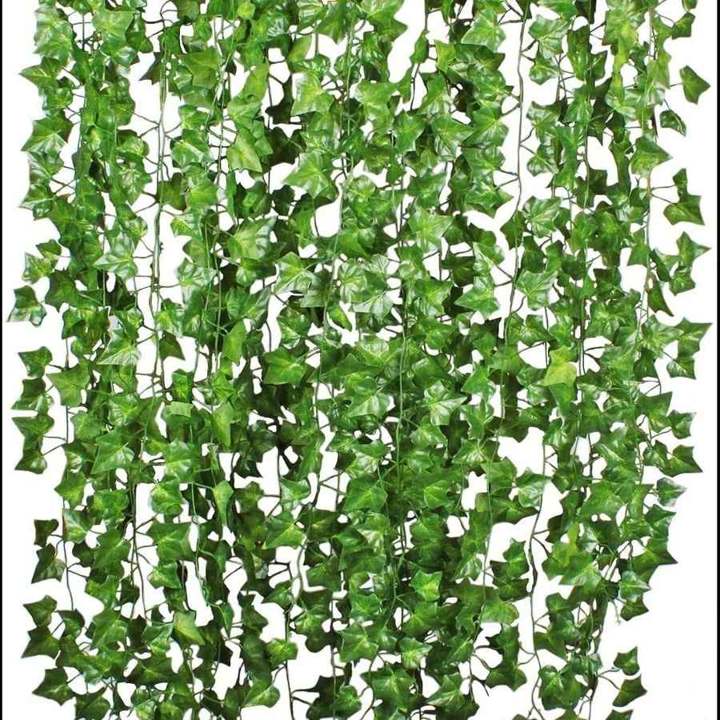
Check the stated overall length including the trail, not just the basket diameter. The Persian fern vine and the ivy garland are both worth adding to a floral display for exactly this reason.
Outdoors: UV or it fades
Flowers fade faster than foliage, and reds, purples and deep pinks fade fastest of all.
For an outdoor floral display, UV-treated material is not optional, and a green-led arrangement with some flower will still look right in three years where a solid ball of pink will not - the outdoor artificial guide covers this properly.
Where floral faux works best
North-facing walls, where a real flowering basket has no chance all season.
Front doors, where the same look every day is the point.
Winter, when nothing living is flowering.
Holiday lets and second homes, where nobody is there to water.
Events, where it needs to look right on one specific day - the artificial range covers them.
Where it does not
At close range, next to real planting. Beside a genuine flowering border, an artificial basket has something to be compared against, and the comparison is not kind.
Hung on its own, at height, with nothing living beside it, the same display convinces completely. Position is doing more work than quality here.
Mixing faux flower into real planting
A legitimate trick and it works well. A basket of tough living foliage with a few artificial flower stems pushed in gives colour in a spot where flowering plants will not perform.
The living foliage carries the realism and the faux flowers carry the colour. Nobody at ground level is auditing which is which - the basket range covers what to build it in.
Cleaning and reshaping
Dust dulls flowers faster than foliage because petals are paler. Two or three rinses a year outdoors, a damp cloth indoors.
After wind, bend the stems back into position and redistribute the flowers so they are not all facing one way - a five-minute job that makes an old display look new.
Storing between seasons
If a floral display is a summer one, store it somewhere dry and, crucially, do not compress it. Petals crushed under a box for six months do not recover.
Stand it upright in a bag rather than flat under anything - the winter range covers storing seasonal displays.
The honest limitation
It will not change through the season and it will eventually fade, however good it is. Artificial buys years rather than forever.
What it will do is look the same in February as in July, need no watering, and cost nothing to run - which for a difficult position is the whole argument.
Judging it in place
Hang it where it is going and look from where people actually see it - the pavement, the path, the kitchen window. If it does not convince at that distance, 30 days and we pay the return postage - the returns page has the terms.
The short version
- Flowers are harder to fake than foliage because real petals vary in tone and stage.
- Look for tonal variation, buds among the open blooms, and fabric rather than hard plastic.
- A real basket is mostly green - flower-heavy displays are the commonest giveaway.
- One or two colours, slightly muted, reads far better than a full spectrum.
- Judge it at the distance it will be seen from, not at arm's length.
Frequently asked questions
Why do artificial flowers look fake when the foliage does not?
A real leaf is fairly uniform, but a real flower varies in tone across a single bloom and no two are at the same stage. Cheap faux flowers are moulded identical and coloured flat, so they read as a repeating pattern.
How much flower should a display have?
Less than you would think. A real flowering basket is mostly green, with foliage carrying the volume and flowers punctuating it. Displays sold flower-heavy photograph well and look wrong on a wall.
Which colours work best?
One or two, slightly muted rather than saturated, since real flowers outdoors are always somewhat weathered by light. A display containing every colour available announces itself immediately.
Can I mix artificial flowers into a real basket?
Yes, and it works well. Tough living foliage with a few faux flower stems pushed in gives colour where flowering plants will not perform - the living foliage carries the realism.
Do artificial flowers fade outdoors?
Faster than foliage, and reds, purples and deep pinks fade fastest. UV-treated material is essential outdoors, and a green-led display with some flower ages far better than a solid ball of colour.