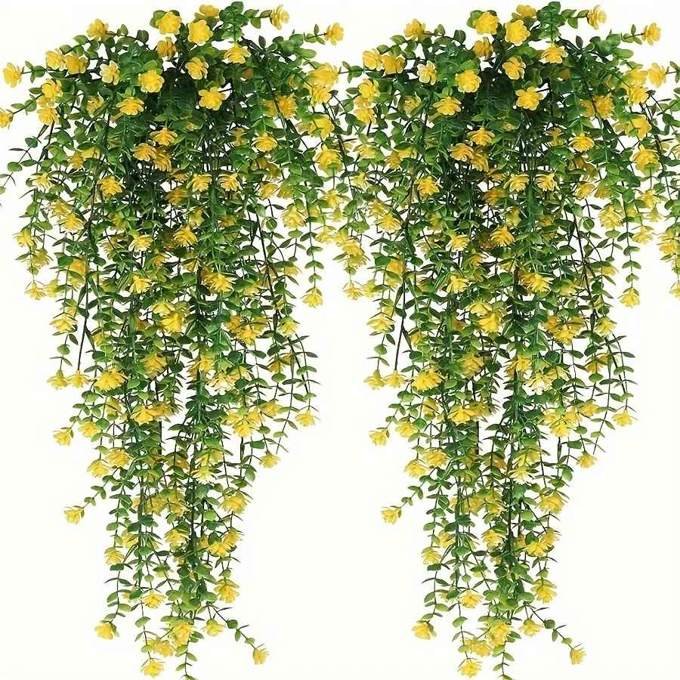
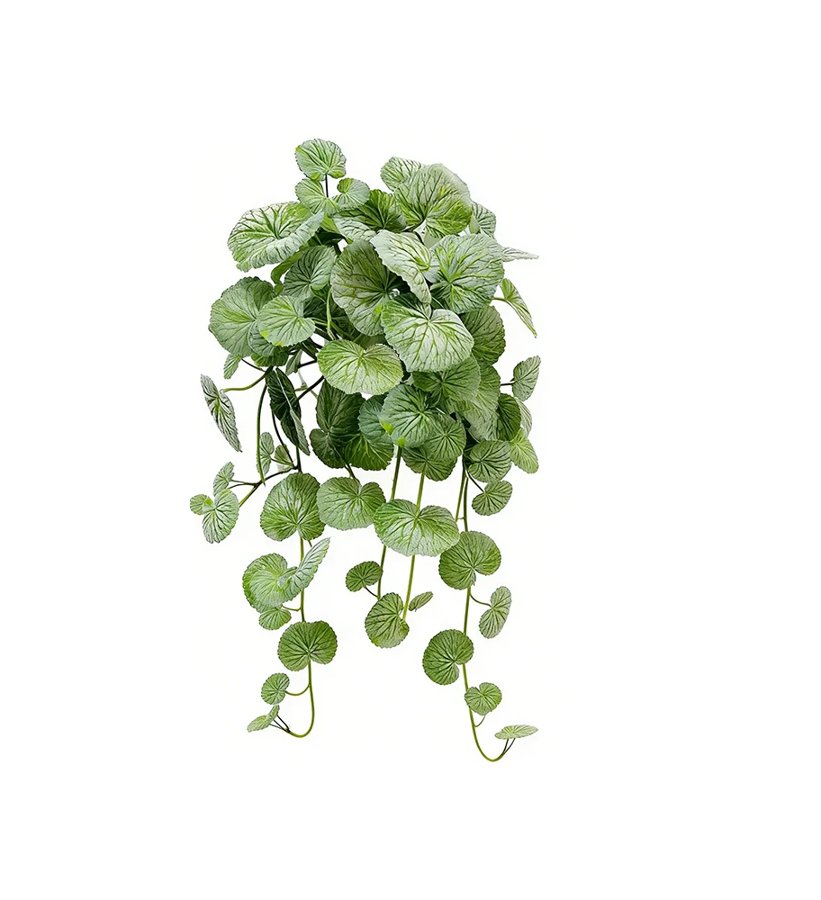
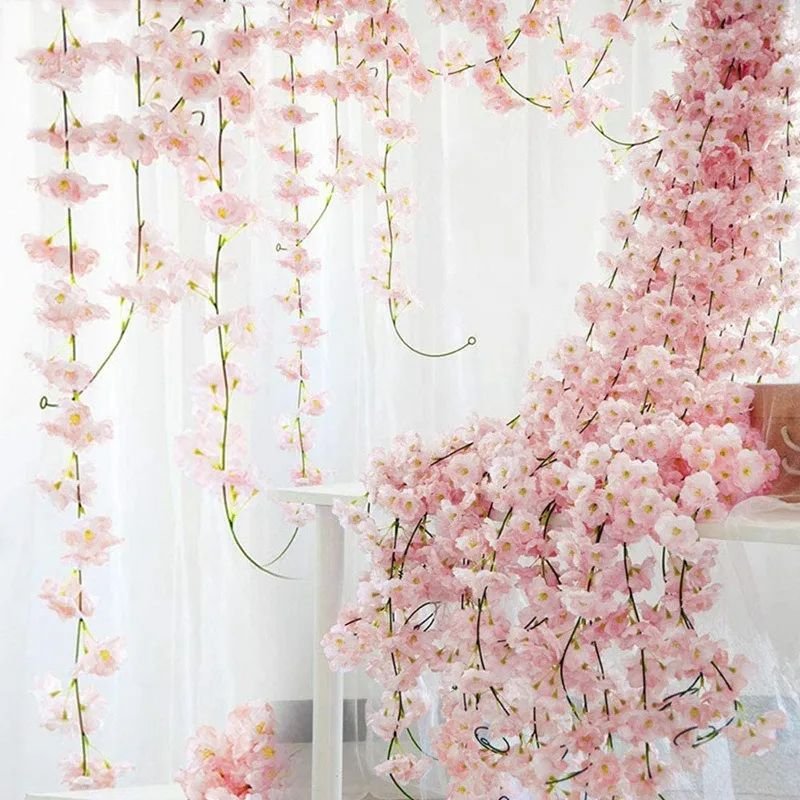
A dark corner, a high stairwell or a north-facing room gives a living plant less light than it needs, and faux is the only thing that will look good there long term. Indoors, choose fabric-petal displays with varied leaf shapes and keep them dusted.
There is a point where insisting on a living plant stops being gardening and starts being a slow way of killing houseplants. This is about recognising that point.
The honest case for faux indoors
Some positions do not have enough light for anything to live. A corner five metres from a window, a windowless landing, the top of a stairwell - these will kill a succession of plants.
An artificial display in that spot is not a compromise, it is the only thing that works - the artificial range covers them.
How dark is too dark
A rough test: if you would need a light on to read comfortably there during the day, it is too dark for most trailing plants to thrive rather than merely survive.
Remember a hanging position is further from the window and higher than it looks, so it gets meaningfully less light than the room feels like it has - the indoor guide covers positions.
Why faux reads better indoors
Three reasons, and they are the mirror of why it is harder outdoors.
Indoor light is even and diffuse, so there are no hard highlights to give plastic away. There is no weather to fade or flatten it. And nobody stands under a stairwell display examining a leaf.
What to look for
- Fabric petals rather than hard moulded plastic, which reflects flatly.
- Two or three leaf shapes, since real planting is never one repeated leaf.
- Varied greens, because uniform colour is what reads as manufactured.
- Wire-cored stems that can be reshaped.
- A stated overall length including the trail.
Trail length does the work
Indoors more than anywhere, because a hanging display is usually seen from below and from a distance across a room.
A long trail reads as an established plant; a short one reads as an arrangement in a pot - the Persian fern vine is the longest we do, and the ivy garland adds length to anything.
Foliage over flowers, indoors
Counter-intuitive but reliable. Indoor light is soft and close, which is exactly the condition in which artificial flowers are hardest to get away with.
Green trailing foliage passes almost anywhere; a basket of bright faux blooms in a dim corner announces itself - the silk versus plastic guide covers judging petals.
Put it in a real planter
Half of whether a faux display convinces is the container.
A woven, ceramic or terracotta planter reads as a real plant's home; a moulded plastic pot supplied with the display does not - a woven straw planter or a macrame hanger both do that job.
Cover the base
The other giveaway. Visible foam, plastic or bare stems at the compost line is what tells people immediately.
A layer of moss, bark or even small stones over the base costs almost nothing and removes the tell completely.
Shaping it
Displays arrive compressed from packing and look wrong until you deal with it.
Spend five minutes bending the stems out, setting them at different angles and different depths, and letting the trails hang unevenly. Real plants are asymmetric, and symmetry is what looks fake.
Dust is the whole maintenance job
Indoor foliage collects dust in a way outdoor never does, and dusty artificial leaves look grey rather than green.
A damp cloth every few weeks, or a cool hairdryer for anything intricate. This one habit is the difference between a display that keeps passing and one that stops.
Sunlight still fades it
Even indoors. A display in a bright window fades over years, and faster if it is not UV-treated.
For a dark corner this is not a concern at all, which is another reason those positions suit faux so well - the outdoor artificial guide covers UV treatment.
Mixing with one real plant
A useful trick where there is a little light. One genuinely living plant nearby anchors the eye, and the artificial displays around it are read as real by association.
It works better than either all-real or all-artificial in a room with mixed light.
Where to hang it
Corners, stairwells and above furniture - the same rules as living plants, minus the light requirement, which is what opens up the dark spots.
The indoor styling guide covers placement, and the indoor range covers planters.
Fixing it
Much easier than a living one, since there is no watered weight - but a ceiling fixing still needs a joist or a proper cavity fixing rather than plasterboard alone.
The hooks range covers those, with free UK delivery over £20 and 30 days to change your mind.
The short version
- If you would need a light on to read there in the day, it is too dark for most plants.
- Indoor light is even and diffuse, which is why faux passes more easily inside.
- Choose foliage over flowers indoors - soft close light exposes faux blooms.
- Cover the base with moss or bark; visible foam is the commonest giveaway.
- Dust is the entire maintenance job, and it is what stops a display convincing.
Frequently asked questions
When is an artificial basket the right choice indoors?
When the position genuinely has too little light - a corner far from a window, a windowless landing, a high stairwell. In those spots faux is not a compromise, it is the only thing that will look good.
How dark is too dark for a real hanging plant?
As a rough test, if you would need a light on to read comfortably there during the day. Remember a hanging spot is higher and further from the window than the room makes it feel.
Why does artificial look more convincing indoors?
Indoor light is even and diffuse, so there are no hard highlights to give plastic away, there is no weather to fade or flatten it, and nobody examines a leaf at the top of a stairwell.
What gives an artificial display away?
Visible foam or bare stems at the base, uniform leaf shape and colour, a short trail, and dust. A layer of moss over the base and a damp cloth every few weeks fix most of it.
Should I use flowers or foliage indoors?
Foliage. Soft close indoor light is exactly the condition where artificial flowers are hardest to get away with, whereas green trailing foliage passes almost anywhere in a room.