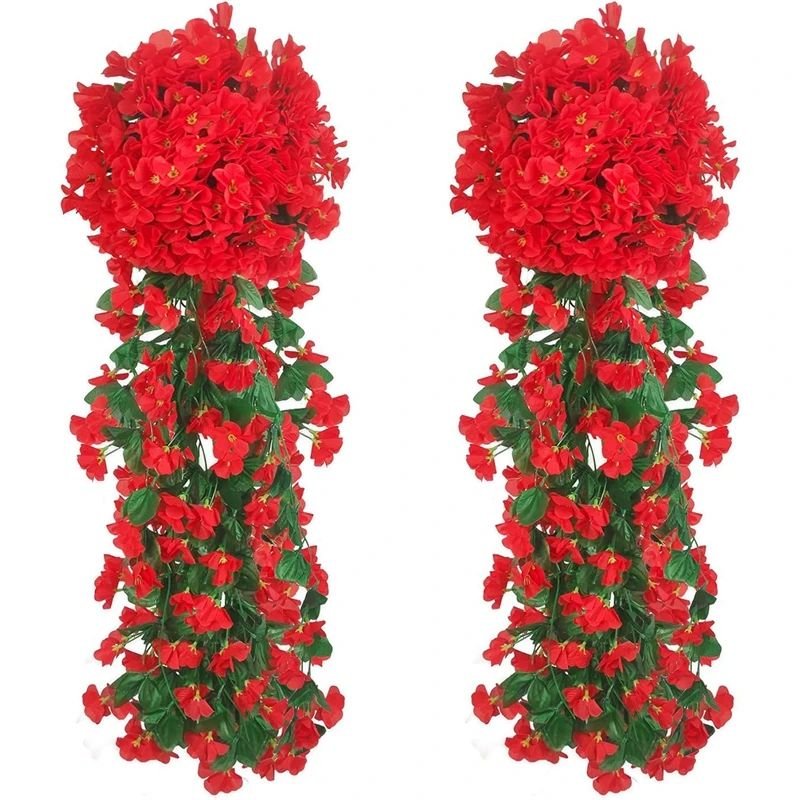
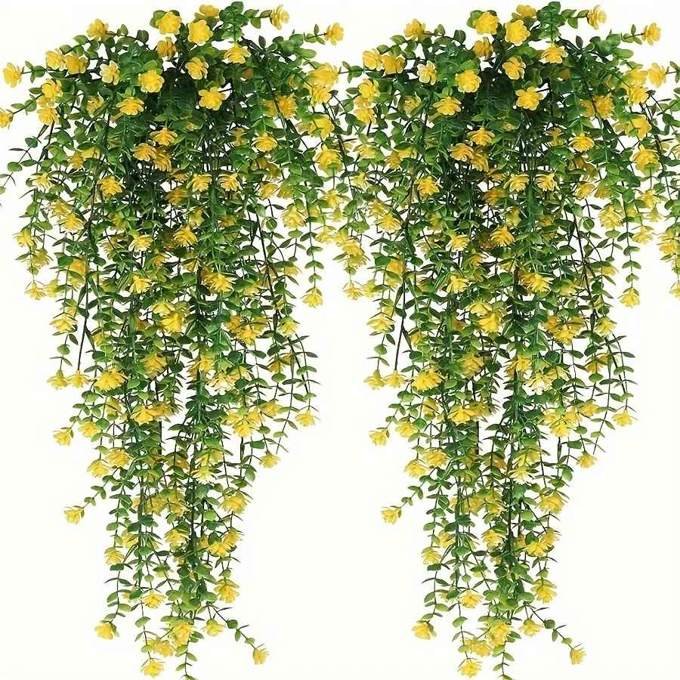
Silk and fabric flowers look considerably more realistic because the petals are thin, slightly translucent and catch light the way real ones do. Moulded plastic is tougher and cheaper but reflects light flatly. Indoors, choose fabric; outdoors, choose UV-treated whichever material it is.
Two materials, sold side by side, at quite different prices, and the difference is genuinely visible - though not always in the direction people assume.
What silk actually means
Almost never real silk. The term covers fabric-petal flowers generally - polyester, rayon and blends - cut and shaped rather than moulded.
It is a description of construction rather than fibre, and that construction is the reason they look better.
Why fabric looks more real
A real petal is thin and slightly translucent, so light passes through it and the colour shifts depending on where you stand.
Fabric does the same thing. Moulded plastic is opaque and reflects light off its surface in a hard, even way that nothing living does - which is what your eye registers as fake before you have consciously looked - the artificial guide covers judging quality.
Where plastic wins
Being fair about it, because plastic is not simply the worse option.
Toughness. Plastic petals do not crush, fray or lose shape.
Rain. It sheds water and dries immediately, where fabric can hold moisture and go limp.
Cleaning. A hose or a wipe restores it completely.
Price. Considerably cheaper for the same coverage.
Where fabric wins
Realism, decisively, at any distance under about three metres.
Shape. Fabric petals can be bent and reshaped individually, so a squashed flower recovers.
Colour depth. Fabric takes graded and shaded dye far better, which is what gives a flower its variation.
Movement. It stirs in a breeze; rigid plastic does not - the artificial flowering range covers stems and bunches.
The material is not the whole story
An important point, because the silk-versus-plastic framing hides it.
A good plastic flower with tonal shading and varied petal shapes beats a cheap fabric one that has been dyed flat and cut identically. Quality of manufacture matters more than material category.
Judge the flower, not the label.
UV treatment matters more than either
For anything outdoors, this is the deciding factor and it applies to both materials.
An untreated flower of either kind fades noticeably within a summer. A UV-treated one holds colour for years. Fabric without UV treatment fades faster than treated plastic, so material alone tells you nothing about outdoor life - the outdoor artificial guide covers this.
Indoors: fabric, almost always
Indoor displays are seen close, in even light, with no weather to survive. Every argument for plastic disappears and every argument for fabric applies.
This is where the price difference is most worth paying - the indoor range covers planters, and the indoor styling guide covers placement.
Outdoors: UV-treated, then whichever
Outdoors is seen at distance, in changing light, through weather. The realism advantage narrows and the durability advantage matters more.
UV-treated plastic or coated fabric both work. Untreated fabric in a wet, sunny position is the combination to avoid.
The hybrid, which is most of what you see
Most good displays combine both - fabric petals on the flowers where realism counts, plastic stems, leaves and structure where toughness does.
That is not a compromise, it is the sensible answer, and a display built that way outperforms either material used alone - the ready-to-hang range is built like that.
How to tell them apart in a photograph
Look at the highlights. A plastic petal has a hard bright spot where light hits it; a fabric one has a soft graded sheen.
Also look at the petal edges - moulded plastic edges are uniform and slightly thick, fabric edges are thin and often slightly irregular. The artificial range states the material on each display.
Cleaning each
Plastic: rinse under a tap or hose, shake, done.
Fabric: a soft brush or a hairdryer on cool for dust, a barely damp cloth for anything stubborn. Do not soak it, and let it dry fully before it goes back outside.
Reshaping
Both benefit, and fabric benefits more. After wind or storage, bend the petals back out individually and set the stems at different angles.
Five minutes of this makes an old display look new, and it is the single most useful thing you can do to artificial flowers - the floral baskets guide covers building a display.
What lasts longer
Plastic, mechanically. Fabric, aesthetically, provided it is treated and stored well.
A UV-treated fabric display kept out of constant full sun and stored uncrushed will look good for years. An untreated one in blazing sun will not see a second summer looking right.
Which to buy
Fabric indoors, UV-treated whichever outdoors, and judge the individual product rather than the material name.
Hang it where it is going and look from the distance it will be seen from. The artificial range lists the material on every display - 30 days to change your mind and we pay the return postage - the returns page has the terms, and free UK delivery applies over £20.
The short version
- Silk almost never means silk - it means fabric petals, cut rather than moulded.
- Fabric is slightly translucent, so light passes through as it does in a real petal.
- Plastic is tougher, cheaper, sheds rain and cleans with a hose.
- A good plastic flower beats a cheap fabric one - judge the product, not the label.
- UV treatment decides outdoor life far more than which material it is.
Frequently asked questions
Are silk flowers actually silk?
Almost never. The term covers fabric-petal flowers generally - polyester, rayon and blends - cut and shaped rather than moulded. It describes the construction, and that construction is why they look better.
Why do fabric flowers look more real?
A real petal is thin and slightly translucent, so light passes through it and the colour shifts as you move. Fabric does the same; moulded plastic is opaque and reflects light flatly off its surface.
Is plastic always the worse choice?
No. Plastic petals do not crush or fray, they shed rain and dry immediately, they clean with a hose, and they cost considerably less. A well-made plastic flower beats a cheap flat-dyed fabric one.
Which should I use outdoors?
Whichever is UV-treated - that matters far more than the material. Untreated flowers of either kind fade noticeably within a summer, and untreated fabric in a wet sunny spot is the worst combination.
How do I clean each type?
Plastic rinses under a tap or hose and can be shaken dry. Fabric wants a soft brush or a cool hairdryer for dust and a barely damp cloth for anything stubborn - do not soak it, and dry it fully before rehanging.