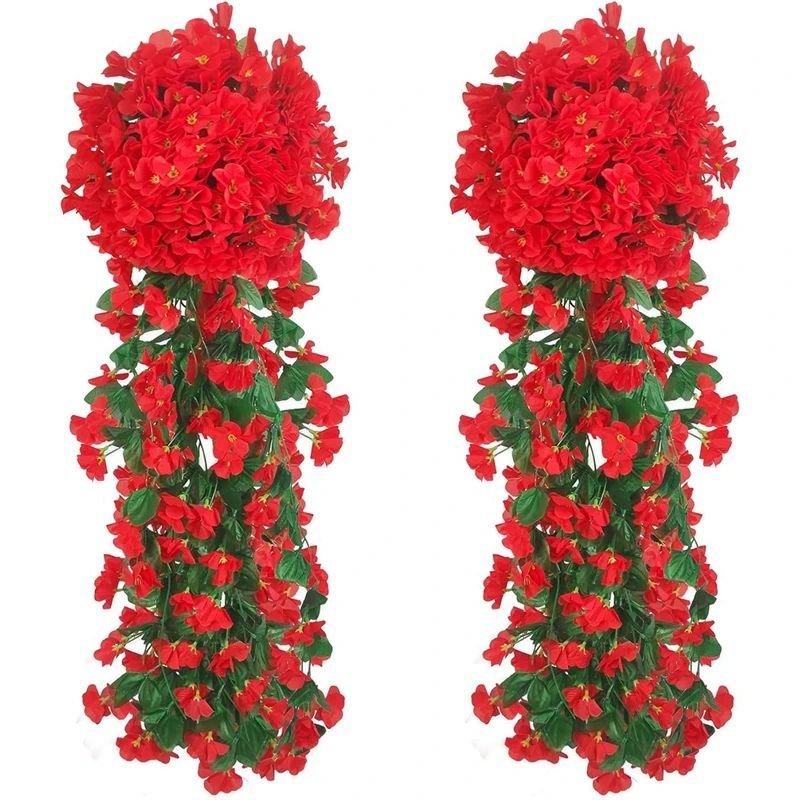
Trailing begonias are the strongest performer for shade and part shade, flowering heavily from summer to the first frosts. Buy trailing or pendula types, start tubers indoors in spring, and water carefully - begonias rot more readily than they wilt.
If the wall faces north and everything else you have tried has sulked, this is the plant to try next.
Why they suit baskets
Three reasons. They flower heavily and continuously rather than in flushes. The blooms are large enough to read from a distance, which matters above eye level. And they perform in shade where almost nothing else flowering does.
They also come in a genuine trailing form, which is not true of every good garden plant - the flowers guide covers matching plants to position.
Trailing versus upright
The distinction to get right at the point of purchase.
Trailing or pendula begonias cascade over a rim and are what a basket wants.
Upright bedding begonias are excellent plants that sit in a basket as a neat dome and never hang.
Look for trailing, pendula or cascading in the description, and if you are buying tubers rather than plants, the packet will say.
Tubers versus plants
The cost decision, and the one that rewards planning ahead.
Tubers are far cheaper and need starting indoors in early spring - laid hollow side up in damp compost somewhere warm and light, potted on once shoots appear, and hardened off before going out.
Potted plants cost considerably more and go straight into the basket. For one basket, buy plants; for several, tubers are worth the six weeks of attention.
Position
Part shade is ideal, full shade is workable, and full sun is where they struggle.
Strong afternoon sun scorches the leaves and bleaches the flowers. A north or east wall, or anywhere with morning sun and afternoon shade, is exactly right - which makes them one of the few genuinely useful shade basket plants.
They rot before they wilt
The most important thing to know, and the opposite of the advice for most basket plants.
Begonias have fleshy stems and tuberous roots that hold water, so they tolerate a dry spell better than most and are damaged badly by sitting wet. Overwatering causes stem rot at the base, which is not recoverable.
Let the compost surface dry slightly between waterings rather than keeping it constantly damp - the care guide covers the weight test.
Water the compost, not the plant
Water sitting in the crown, where the stems meet, is what starts rot.
Take the rose off the can and water at the compost surface at the base of the plants, rather than showering the whole basket from above - the watering can guide covers the kit.
Drainage matters more than usual
Because of the rot risk, a begonia basket wants to drain freely. A liner that has been sealed to hold water is the wrong choice here.
Open coco or moss with normal drainage suits them - the liners range covers them, and the lining guide covers fitting one.
Feeding
High-potash liquid feed every week or two from about six weeks after planting, same as any heavy-flowering basket plant.
Nitrogen-heavy feed gives large soft leaves and fewer flowers, and soft growth is more prone to the rot problem - the compost and feed guide covers what to use.
Deadheading
Worth doing, and easy - the spent flowers detach cleanly.
Remove them because a begonia flower going over in wet weather turns to mush against the foliage, which is another route to rot. It is a two-minute job that both improves the look and keeps the plant healthy.
How many per basket
Three trailing begonias fill a 35cm basket well on their own. They are generous plants and the flowers are large.
Resist adding more - a crowded begonia basket dries unevenly and holds moisture in the middle, which is the condition they least like - the plant numbers guide covers quantities.
What to pair them with
Shade-tolerant companions - trailing ivy, lobelia, bacopa. Anything that wants the same conditions, which the trailing plants guide covers.
Pairing them with sun-loving plants means one of them is in the wrong position permanently, whatever you do.
Frost, and saving the tubers
Begonias are frost-tender and will collapse at the first hard one.
You can save the tubers: before the frost, let the foliage die back, lift the tubers, clean off the compost, dry them and store somewhere frost-free and dry over winter. Start them again in spring. Plenty of people do this for years off the same tubers - the watering range covers storing the basket alongside them.
Where they come from
A nursery or garden centre - we sell the basket, the liner, the bracket and the watering kit rather than the plants. For a spot too dark or too exposed even for begonias, the artificial flowering range is the alternative that needs none of this.
The short version
- The strongest flowering basket plant for shade and part shade.
- Buy trailing or pendula types - upright bedding begonias never hang.
- They rot before they wilt, which reverses the usual watering advice.
- Water the compost at the base, not the crown where the stems meet.
- Tubers cost a fraction of plants but need six weeks indoors from early spring.
Frequently asked questions
Are begonias good for hanging baskets?
Among the best, especially for shade. They flower heavily and continuously to the first frosts, the blooms are large enough to read from a distance, and they perform where almost nothing else flowering will.
Do begonias need sun?
No - part shade is ideal and full shade is workable. Strong afternoon sun scorches the leaves and bleaches the flowers, so a north or east wall suits them better than a south-facing one.
Why is my begonia rotting at the base?
Almost always overwatering. Begonias have fleshy stems and tuberous roots that hold water, so they cope with a dry spell but are badly damaged by sitting wet. Let the surface dry slightly between waterings.
Should I buy tubers or plants?
Tubers are far cheaper but need starting indoors in early spring and hardening off before they go out. Potted plants cost more and go straight in. For one basket buy plants; for several, tubers are worth it.
Can I keep begonias over winter?
Yes. They are frost-tender and collapse at the first hard frost, but you can let the foliage die back, lift the tubers, clean and dry them, store them somewhere frost-free and start them again in spring.