Calibrachoa, bacopa, surfinia-type trailing petunias, trailing verbena and bidens all flower for months and mostly clean themselves, so they need no deadheading at all. Choose self-cleaning varieties, plant slightly fewer than the guides suggest, and mix slow-release feed into the compost at planting.
A basket that needs daily attention is a basket that stops looking good the first busy fortnight. These are the plants that forgive that.
What low-maintenance actually means here
Three separate qualities, and a plant needs at least two of them.
Self-cleaning - spent flowers drop by themselves rather than needing deadheading.
Long-flowering - continuous bloom rather than flushes with gaps between.
Forgiving - survives a missed watering without collapsing permanently.
Calibrachoa
Probably the single best low-maintenance basket plant. Small petunia-like flowers in quantity, from early summer to the first frosts, and it is genuinely self-cleaning.
It also holds its shape without getting leggy the way full-size petunias can, so it needs no cutting back mid-season - the flowers guide covers the alternatives.
Bacopa
Tiny white or pale flowers on fine trailing stems, flowering continuously and dropping its own spent blooms.
It suits part shade as well as sun, which makes it one of the few genuinely flexible choices, and it fills gaps between showier plants without competing with them - the liners range covers what keeps it damp enough.
Surfinia-type trailing petunias
Vigorous, heavy-flowering and much better behaved than seed-raised petunias.
The trade is that they are hungry and thirsty - they will flower prodigiously if fed and will sulk if not. Low-maintenance in attention, not in feeding.
Trailing verbena
Tough, drought-tolerant once established, and flowers in clusters over a long season.
It copes with a hot exposed wall better than most, which is exactly where low-maintenance matters most, and it does not need deadheading to keep going.
Bidens
Small yellow daisy flowers on a spreading, trailing plant. Very tolerant of heat and dry spells, and it flowers for months without any intervention.
Useful as the filler that keeps a basket looking full when the showier plants have a quiet week.
Trailing lobelia
Reliable, cheap and self-cleaning, in blue, white and purple.
Its one weakness is heat - it can go over in a very hot spell and needs cutting back to recover, which is the one bit of maintenance on this list.
Ivy-leaved geraniums
Drought-tolerant to a degree nothing else here matches, because the leaves store water.
They forgive a missed watering better than any other flowering basket plant, which makes them the right answer for a holiday or a hot exposed wall - the basket range covers what to plant them in.
Foliage carries the quiet weeks
The lowest-maintenance element in any basket. Trailing ivy, dichondra and helichrysum keep a basket looking full when flowering pauses.
A basket that is a third foliage never looks empty, however the flowering is going - the trailing plants guide covers those.
What to avoid if maintenance is the concern
Large-flowered petunias, which mark in rain and need deadheading. Full-size marigolds, which need constant picking over. Anything described as needing regular pinching or cutting back.
Also avoid mixing a vigorous plant with a delicate one, since the strong one swamps the weak one and creates work - the brackets range covers getting the basket somewhere it will cope.
Plant slightly fewer
The most effective low-maintenance decision there is.
An overplanted basket dries faster, competes harder and needs more feeding. Slightly under-planting gives a basket that fills out by July and copes better all season - the plant numbers guide covers counts.
Set it up to look after itself
Slow-release feed granules and water-retaining granules mixed in at planting cover the first two or three months of both jobs.
A liner with a moisture-retaining backing and a slightly larger basket than you think you need do the rest - the liners range and the compost guide cover both.
Position does more than plant choice
A sheltered basket in morning sun needs a fraction of the attention of an exposed one in all-day sun and wind.
If low maintenance is the goal, move the basket before changing the planting - the watering guide covers what drives the frequency.
Watering is still the limiting factor
Being honest about the ceiling on all of this: no plant choice removes the need to water a basket in July.
The plants above forgive a missed day rather than a missed week, and a hot windy spell will still empty a basket daily whatever is in it. If the watering itself is the problem, a drip kit on a timer solves it properly where plant selection cannot.
The watering systems guide compares them, and the watering range covers the kit.
Pinching out, the one job worth doing
An exception to the no-maintenance rule, because five minutes in May saves the whole season.
Pinching the growing tip out of a young plant makes it branch from lower down into a bushier plant with far more flowering stems. It delays the first flowers by a fortnight and roughly doubles the eventual display, which is the best return on effort available.
The genuinely zero-maintenance option
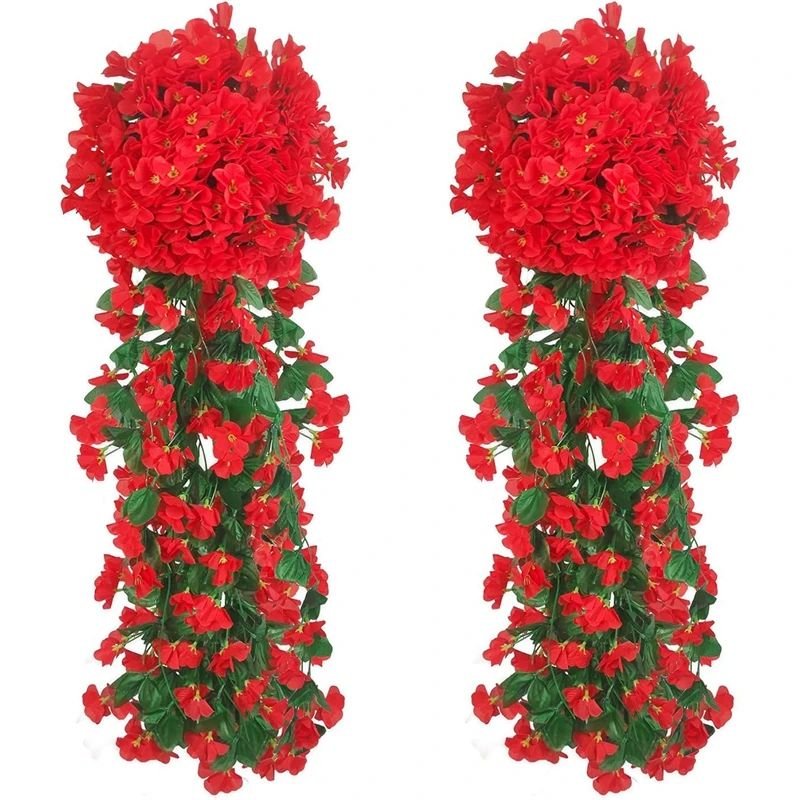
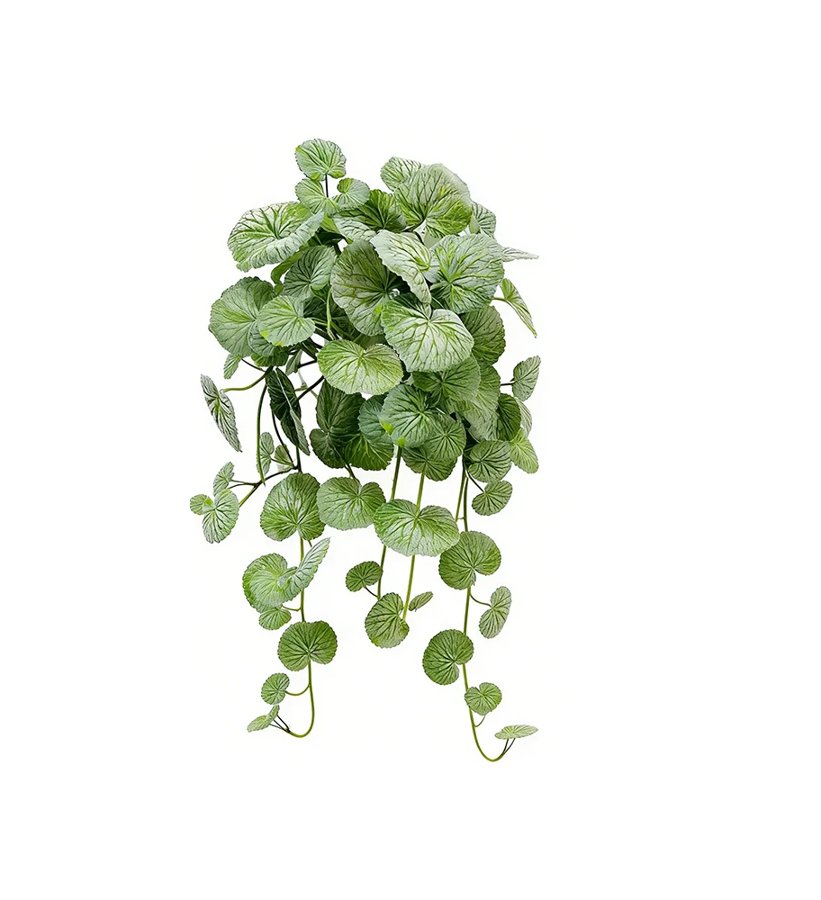
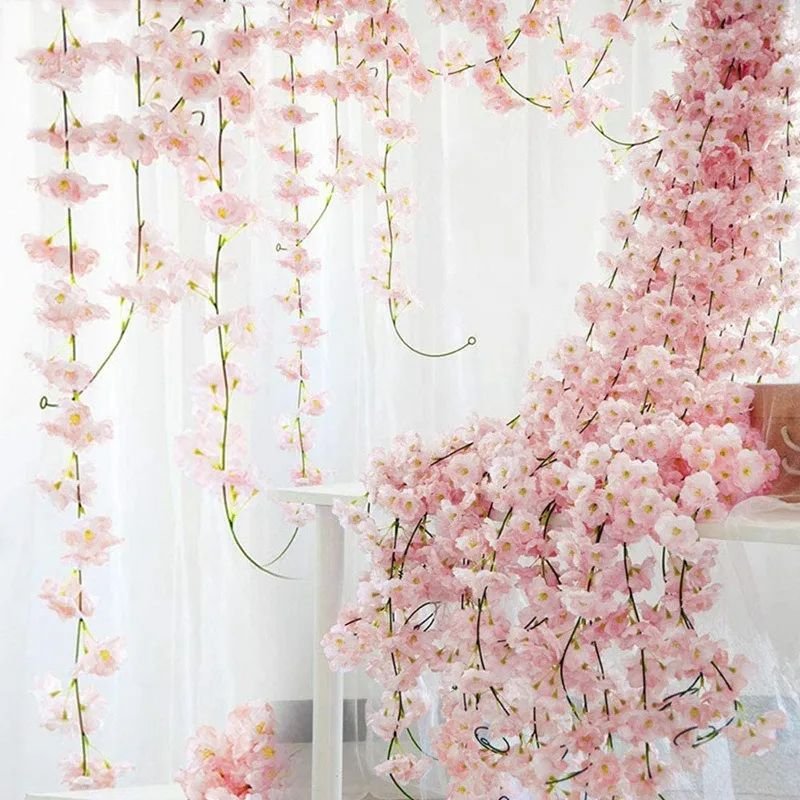
No feeding, no watering, no deadheading and no seasonal gap. An artificial display is the honest answer where nothing living will get the attention it needs.
The artificial range covers those, with free UK delivery over £20.
The short version
- Self-cleaning, long-flowering and forgiving - a low-maintenance plant needs two of three.
- Calibrachoa is the strongest all-round choice; it never needs deadheading.
- Ivy-leaved geraniums forgive a missed watering better than anything else flowering.
- Planting slightly fewer is the single most effective low-maintenance decision.
- A third foliage means the basket never looks empty during a quiet flowering week.
Frequently asked questions
Which hanging basket plants need the least work?
Calibrachoa, bacopa, trailing verbena and bidens all flower for months and drop their own spent blooms, so they need no deadheading. Ivy-leaved geraniums forgive a missed watering best of all.
What does self-cleaning mean?
That spent flowers fall off by themselves rather than needing to be picked off. It is what removes the deadheading job entirely, and it is the quality worth looking for on a plant label.
Which plants should I avoid?
Large-flowered petunias, which mark in rain and need deadheading, full-size marigolds, which need constant picking over, and anything whose label mentions regular pinching or cutting back.
How do I set a basket up to look after itself?
Mix slow-release feed and water-retaining granules into the compost at planting, use a liner with a moisture-retaining backing, choose a slightly larger basket, and plant slightly fewer than the guides suggest.
Does position matter more than plant choice?
Often, yes. A sheltered basket in morning sun needs a fraction of the attention of an exposed one in all-day sun and wind, so moving the basket usually beats changing the planting.