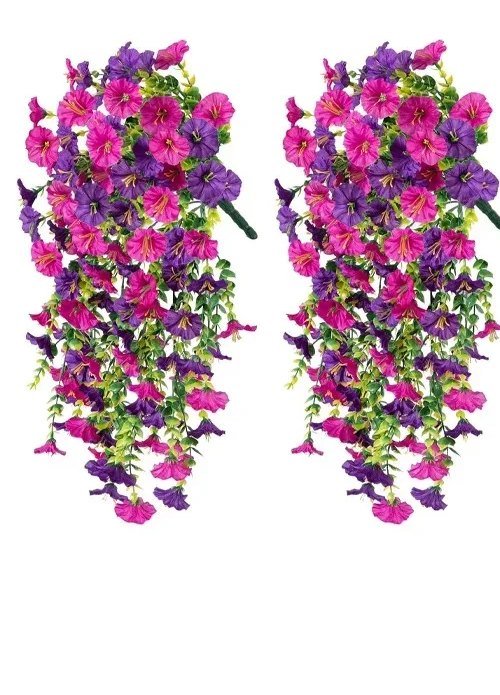
Ready-made wins on time and on getting a balanced display from someone who does it often. Building your own wins on control of size, colour, ratio and trail length, and on being able to swap parts seasonally. For one basket, buy ready-made; for several, build.
Two routes to the same wall, and the right one depends far more on how many baskets you want than on which produces a better result.
What ready-made actually gives you
A display that has been balanced by someone who assembles them regularly, arriving in one piece and ready to hang.
That balance is the part people underestimate. Getting the ratio of trailing to mounding to upright right takes practice, and a first attempt usually ends up flower-heavy and flat across the top - the ready-to-hang range is that route.
What building your own gives you
Control over the four things that decide how a basket reads: the size, the colour palette, the flower-to-foliage ratio and the trail length.
If you have a specific look in mind, or a specific spot with awkward proportions, no ready-made display will match it as well as one you assemble - the build-your-own guide covers the method.
The time difference
Ready-made: unpack, hang, done.
Build your own: an hour or so per basket for an artificial one, longer for a planted one that also needs growing on before it goes out.
That hour is enjoyable if you like doing it and a chore if you do not, which is really the deciding question - the liners range covers the part of the job nobody enjoys.
The cost difference
Closer than people expect. Buying stems, foliage and a base individually usually lands near the price of a comparable ready-made display, because the parts are bought in ones rather than in bulk.
Where building saves money is over time - you keep the foliage base and swap only the accents each season.
Planted baskets, ready-made
Garden centres sell these in spring, already grown on and flowering.
They are the fastest route to an immediate display and they cost more than the plants would separately. They also arrive already established, which is the part that is hard to replicate at home without somewhere frost-free.
Planted baskets, home-made
Much cheaper per basket, and the only way to get side planting exactly how you want it.
The catch is timing - the good ones are planted weeks before they go out and grown on under cover, which needs a greenhouse, a porch or a bright windowsill - the show-stopper guide covers that properly.
Artificial, ready-made
The strongest case for buying complete. A well-made faux display has varied leaf shapes, graded colours, buds among the open flowers and a proper trail - all things that are fiddly to assemble and easy to get wrong.
It also arrives shaped, which saves the reshaping job - the artificial range covers them.
Artificial, home-made
Worth doing where you want a specific colour scheme, an unusual size, or a base you can rebuild seasonally.
Buy the trailing foliage first, since it does most of the work, then bulk foliage, then flower stems last and fewer than you think - the artificial flowering range covers the stems.
The ratio is where home-made goes wrong
Almost always the same mistake: too much flower.
A real flowering basket is mostly green, with foliage carrying the volume and flowers punctuating it. Aim for roughly two thirds foliage - if it looks slightly under-flowered on the table, it is about right on the wall.
The base is where it fails
The other common problem. Stems pushed into loose material shift in wind and the display gradually comes apart.
Fit the base tightly enough that it cannot rotate in the basket, and wire it to the frame if there is any movement at all.
Mixing the two
Often the best answer. Buy a ready-made display as the core, then add a couple of trailing stems to lengthen the trail or a few flower stems to shift the colour.
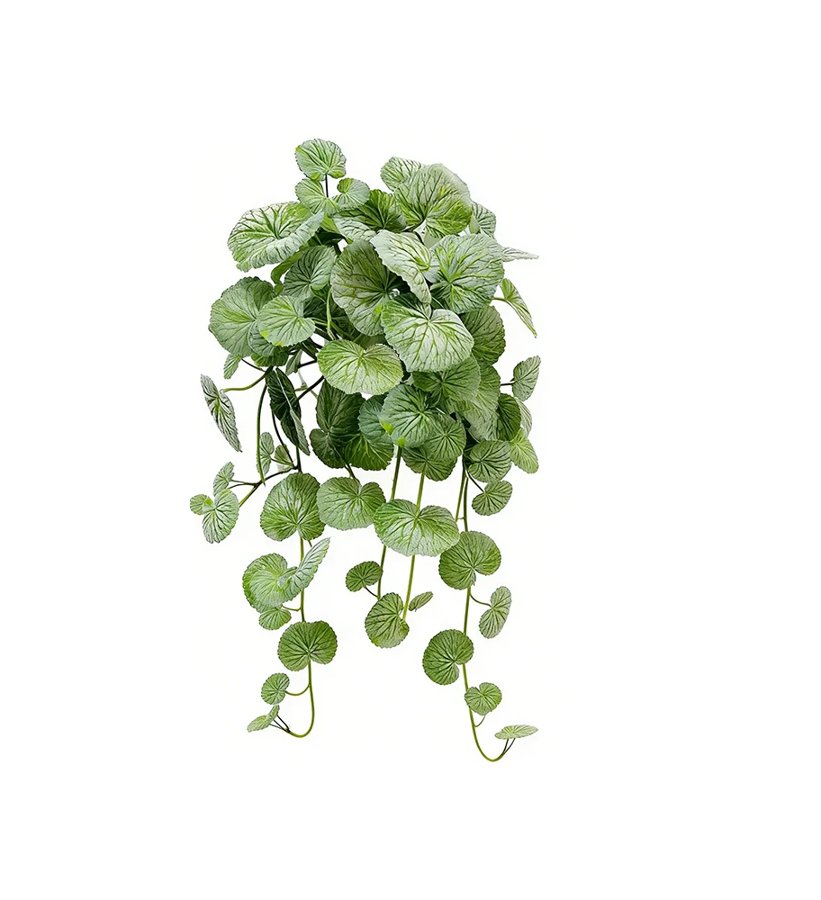
Small adjustments to a professionally balanced display beat building from nothing, and take ten minutes - an ivy garland is the usual thing to add.
Matching several baskets
Ready-made wins clearly here. Three identical displays along a wall read as a designed scheme, and matching three home-built ones by eye is harder than it sounds.
If you want a repeated run, buy them together and from the same batch - the brackets range covers hanging them at matching heights.
Replacing versus repairing
A quiet advantage of building your own: when part of it fades or gets damaged, you replace that part rather than the whole display.
A ready-made display is generally replaced whole, which over several years is the cost difference that matters.
What we would suggest
One basket, or several matching ones: buy ready-made. A specific look, an odd size, or a base you want to rebuild each season: build it.
The ready-to-hang range and the basket range cover both routes, with free UK delivery over £20 and 30 days to change your mind.
The short version
- Ready-made buys you a balance that takes practice to get right.
- Building your own buys control of size, colour, ratio and trail length.
- The cost is closer than expected; the saving comes from reusing the base yearly.
- Home-built displays almost always end up too flower-heavy - aim two thirds foliage.
- For a matching run of three, buy ready-made from the same batch.
Frequently asked questions
Is it cheaper to make your own hanging basket?
Less than people expect for the first one, because stems and bases bought individually land near the price of a comparable ready-made display. The saving comes later, from reusing the base each season.
When is ready-made the better choice?
For one basket, when time matters, and whenever you want several matching displays. Getting the ratio of trailing to mounding to upright right takes practice, and a ready-made one arrives balanced.
When should I build my own?
When you have a specific colour scheme in mind, an awkward size or position, or you want a foliage base you can rebuild seasonally by swapping only the accent stems.
What goes wrong most often when building one?
Too much flower. A real basket is mostly green, so aim for roughly two thirds foliage - if it looks slightly under-flowered on the table, it is usually about right once it is hanging.
Can I adapt a ready-made display?
Yes, and it is often the best route. Add a couple of trailing stems to lengthen the trail or a few flower stems to shift the colour - ten minutes of adjustment to a balanced display beats building from nothing.