A show-stopper needs a large basket, generous side planting so it reads as a ball rather than a bowl, a restrained two-colour palette, and a feeding routine from six weeks. Size and side planting do more than plant choice ever will.
The baskets people photograph outside pubs and cottages are not doing anything mysterious. They are bigger, planted through the sides, and fed properly.
Size first
The single biggest factor and the one nobody wants to hear, because a bigger basket costs more and needs a stronger bracket.
A 40cm basket carries a display a 30cm one physically cannot, holds more compost so it dries slower, and looks deliberate rather than apologetic - the large baskets guide covers the trade-offs.
Plant the sides
The technique that turns a bowl into a ball, and the difference between a professional display and a home one.
Roughly a third of the total plants go through the sides of the basket, evenly spaced in one or two tiers, so the space between rim and base fills in. A solid pot cannot do this, which is why wire and open frames are what show baskets use - the planting guide covers the method.
Get the numbers right
Nine to twelve plants in a 40cm basket including side planting, as a working figure.
Overplanting looks magnificent in June and tired by August, because roots compete and the basket dries faster than anyone can keep up with - the plant numbers guide covers counts by size.
A restrained palette
Two colours plus green, not five.
The baskets that stop people are usually a single strong colour with a white or pale partner, and foliage carrying the rest. Every colour available in one basket reads as a jumble however good the plants are.
Thriller, filler, spiller
One upright centrepiece with height, mounding plants through the middle, and trailers at the rim and through the sides.
The trailers are the largest group in a show basket, because the trail is what gives it scale from below - the trailing plants guide covers those.
Match the vigour
The commonest reason a mixed basket disappoints by July.
Pair a vigorous trailer with a delicate one and by midsummer you have a basket of the vigorous one. Either plant all one variety, or choose partners with similar growth rates - the flowers guide covers matching.
Start early, under cover
Show baskets are planted weeks before they go outside, and grown on somewhere frost-free so they knit together before they face weather.
A basket planted and hung the same day looks like a basket of separate plants for a month. One grown on for three or four weeks looks established from the day it goes up.
Pinch out early
Feels wrong and doubles the display.
Pinching the growing tip from young plants makes them branch from lower down into bushier plants with many more flowering stems. It delays first flowers by a fortnight and is the best return on effort in the whole process.
Feed from six weeks
The point at which fresh compost runs out and a spectacular basket starts producing fewer, smaller flowers.
Slow-release granules at planting, then a high-potash liquid feed weekly. High-nitrogen feed gives leaves rather than flowers - the compost and feed guide covers it.
Deadhead the ones that need it
Large-flowered petunias, geraniums and marigolds all keep flowering longer if spent blooms come off.
Self-cleaning plants like calibrachoa and bacopa do it themselves, which is why they suit anyone who will not be doing this weekly - the low-maintenance guide covers those.
Watering is the limiting factor
A big, heavily planted basket in full sun will want water daily and twice a day in a hot spell. That is the honest cost of a show display.
Plan it before planting - a drip line or a pulley hook, not good intentions - the moisture guide covers stretching the interval.
Check the bracket
A large watered basket is a real load, and a show basket is the heaviest thing most people hang.
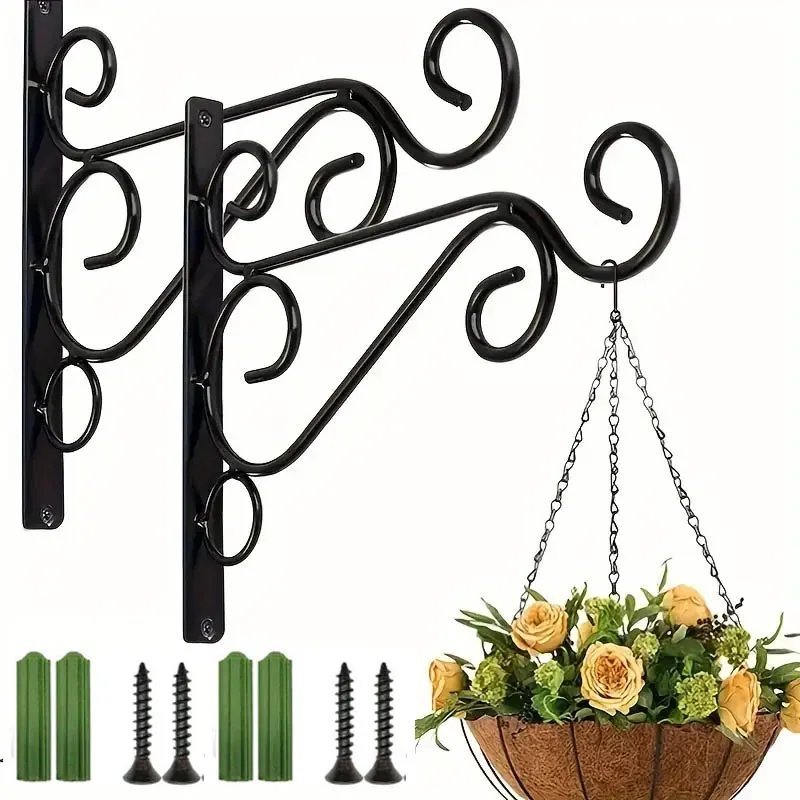
Reach more than half the diameter, two or three fixing points, rated comfortably above the watered weight - the heavy-duty brackets guide covers it, and the brackets range has them.
Position it for the viewer
Hang it where it is seen from - the pavement, the path, the doorway - and at a height where the trail reads rather than the top.
A show basket hung too high shows you the underside; hung too low it blocks the door.
The mid-season rescue
If it tires in late July, cut the leggiest growth back by a third, feed, and water properly for a fortnight. Most baskets come back for a second flush rather than being finished - and it is worth trying before replanting.
The basket range covers the containers, with free UK delivery over £20.
The short version
- Size does more than plant choice - a 40cm basket carries what a 30cm cannot.
- Side planting is what turns a bowl into a ball; about a third of the plants go there.
- Two colours plus green, not five - every colour at once reads as a jumble.
- Grow it on for three or four weeks before hanging so it knits together first.
- A tired basket in late July usually recovers from a hard cut back and a feed.
Frequently asked questions
What makes a hanging basket look spectacular?
Size, side planting and feeding, in that order. A large basket planted through the sides reads as a ball of flowers rather than a bowl, and a feed from six weeks keeps it going through August.
How many plants does a show basket take?
Nine to twelve in a 40cm basket including side planting. Overplanting beyond that looks magnificent in June and tired by August, because roots compete and the basket dries faster than you can keep up.
Should I plant it and hang it straight away?
Better not to. Show baskets are planted weeks early and grown on somewhere frost-free so they knit together. Hung the same day, a basket looks like separate plants for a month.
Why does my basket tire in late July?
Almost always hunger - fresh compost runs out at about six weeks. Cut the leggiest growth back by a third, feed with a high-potash liquid feed and water properly, and most baskets give a second flush.
How much watering does a show basket need?
Daily in summer and twice daily in a hot spell, because it is large and heavily planted. That is the honest cost, so plan a drip line or a pulley hook before planting rather than relying on good intentions.