The biggest gains come from a larger basket, a liner with a moisture-retaining backing, water-retaining granules mixed in at planting, and moving the basket out of wind. Watering technique matters too - a fast pour runs straight through dry compost without wetting it.
Ranked roughly by how much difference each makes, because most advice on this treats a gadget and a change of position as though they were equivalent.
1. Use a bigger basket
The largest single gain and the one people resist because it costs money at the start.
A 40cm basket holds substantially more compost than a 30cm one and dries proportionally slower. If a basket needs watering twice a day, the honest answer is usually that it is too small for its position - the basket range covers the sizes.
2. Get it out of the wind
Underrated, and free. A warm breezy day dries a basket harder than a still hot one, and an exposed corner can want twice the water of a sheltered spot a few feet away.
Moving a basket round a corner or under an overhang often does more than any product - the watering guide covers what drives frequency.
3. Line it properly
A liner with a moisture-retaining backing holds water considerably longer than bare coco or moss, because it stops air reaching the compost from the sides.
On an open wire basket this is the difference between watering once and twice a day in July - the liners range covers them, and the lining guide covers fitting one.
4. Water-retaining granules
Mixed into the compost at planting, they swell and hold water, releasing it as things dry.
They genuinely work in a basket, which is the container they were designed for. Follow the dose on the pack rather than adding generously - too many is a real problem and does not help.
5. Water properly, twice
A technique change that costs nothing.
Dry compost repels water, so a fast pour runs down the inside of the liner and out of the bottom without wetting the root ball. Water a little, wait thirty seconds, then water properly.
Water coming straight out of the bottom is a sign the basket was too dry, not that it is now watered.
6. Plant slightly fewer
More plants in the same compost means faster drying, and an overplanted basket is the one that wilts by lunchtime.
Planting slightly under the usual numbers gives a basket that fills out by July and copes far better through August - the plant numbers guide covers counts.
7. Add a reservoir
Either a purpose-made self-watering basket, or the cheap version: a plastic circle laid in the base of a coco liner with a couple of holes punched an inch up the side rather than at the bottom.
It stretches the interval rather than removing the job, and it adds weight for the bracket - the self-watering guide is honest about what it does.
8. Mulch the surface
Rarely mentioned for baskets and it works. A layer of gravel, bark or even moss over the compost surface slows evaporation from the top.
Keep it thin so water still gets through easily, and keep it clear of plant stems.
9. Choose plants that cope
Ivy-leaved geraniums, trailing verbena and bidens all tolerate a dry spell far better than petunias or lobelia.
If a basket is in a hard position, matching the planting to it beats fighting the position - the low-maintenance picks guide covers those.
What does not work
A saucer under a hanging basket, which holds stagnant water against the base and rots roots.
Sealing the drainage, for the same reason plus freezing in winter.
Watering little and often, which wets only the surface and keeps roots shallow, making the plant less drought-tolerant rather than more.
Grouping baskets
Two benefits. Baskets close together shelter each other slightly and raise the local humidity, and watering becomes one trip rather than a circuit.
It also makes a drip system far cheaper to install later, because the pipe run is short.
Feeding interacts with this
A basket that dries hard between waterings loses nutrients faster, because feed washes through rather than being taken up.
Feed a damp basket, not a dry one, and use slow-release granules at planting so the supply does not depend on timing - the compost and feed guide covers it.
When to stop optimising
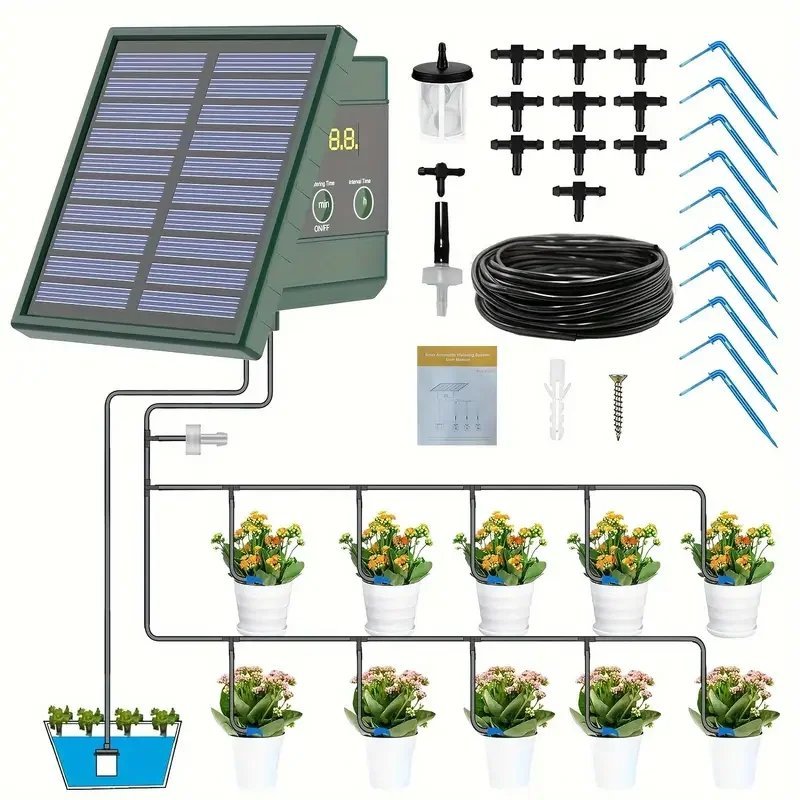
If a basket still needs daily attention after all of this and daily attention is not happening, the answer is a drip kit on a timer rather than another tip.
The solar drip kit needs no socket - the watering systems guide compares the options.
Or remove the problem
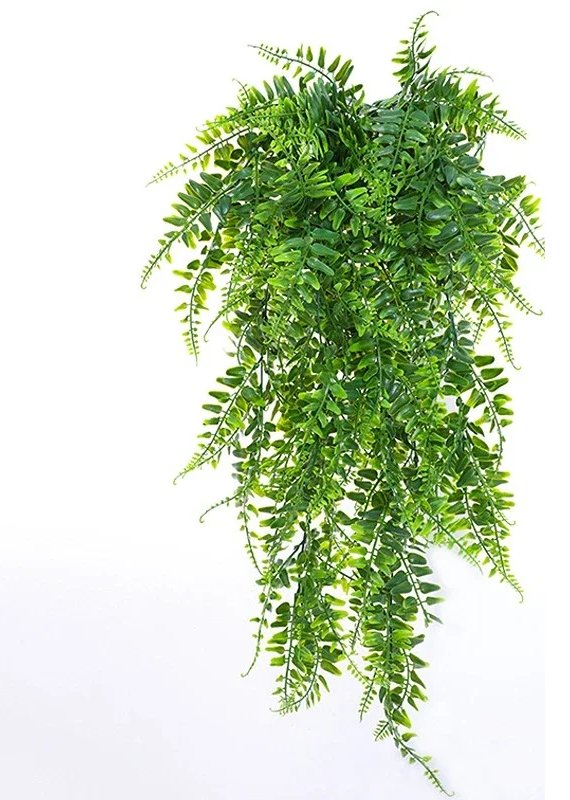
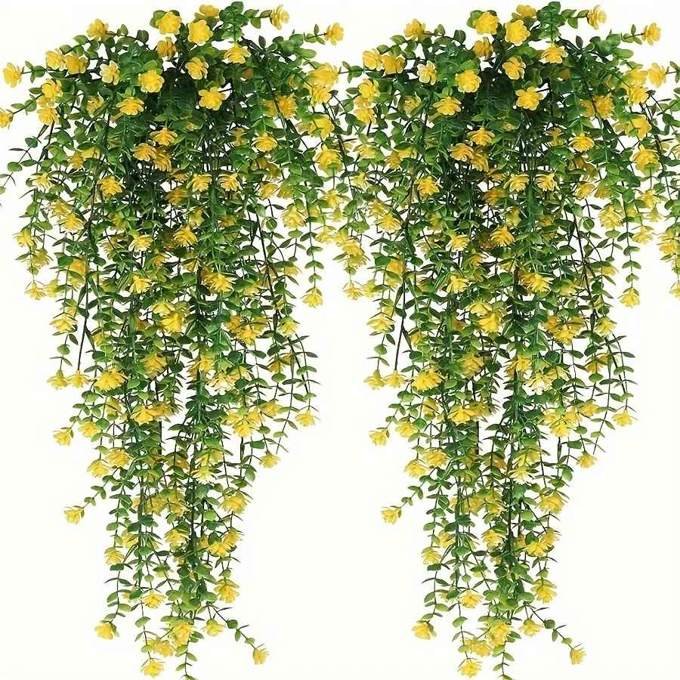
An artificial display never dries out, never wilts and never needs a holiday plan - which for a high or awkward basket is the complete answer rather than a partial one.
The artificial range covers those, with free UK delivery over £20.
The short version
- A bigger basket is the largest single gain - twice-daily watering usually means too small.
- Wind dries a basket harder than heat; moving it can beat any product.
- A liner with a moisture backing stops air reaching the compost from the sides.
- Water twice with a pause - a fast pour runs through dry compost without wetting it.
- Never stand a basket on a saucer; stagnant water against the base rots roots.
Frequently asked questions
How do I stop my hanging basket drying out so fast?
In order of effect: use a larger basket, move it out of the wind, fit a liner with a moisture-retaining backing, mix water-retaining granules into the compost, and water twice with a pause between.
Do water-retaining granules work?
Yes, in a basket - it is the container they were designed for. Follow the dose on the pack rather than adding generously, because too many granules is a real problem and does not improve matters.
Can I stand a basket on a saucer to hold water?
No. It holds stagnant water against the base of the compost, which rots roots, and in winter it freezes. Baskets need to drain freely, which is why sealing the drainage is equally unhelpful.
Is watering little and often better?
No, it is worse. It wets only the surface and encourages roots to stay shallow, which makes the plant less able to cope with a dry spell rather than more. Soak it properly, less often.
Does grouping baskets together help?
A little - they shelter each other and raise the local humidity slightly. The bigger benefits are that watering becomes one trip rather than a circuit, and that a drip system later needs a much shorter pipe run.