Quick answer: Autumn baskets run on heucheras, small ornamental grasses, cyclamen, winter pansies and violas, trailing ivy, and berrying shrubs such as skimmia or gaultheria. Choose for foliage colour and structure rather than flower count, and plant in September while the compost still holds some warmth.
An autumn basket is not a summer basket with fewer flowers. It is a different kind of display, and the plants that carry it are chosen for other reasons.
Plant for foliage first
In summer, flowers dominate and foliage fills gaps. From September that reverses - light levels drop, growth slows, and flowering becomes occasional rather than constant.
So the plants that carry an autumn basket are the ones with leaves worth looking at, and the flowers are a bonus rather than the structure.
Heucheras
The backbone of most good autumn baskets. They come in bronze, amber, lime, deep purple and near-black, hold their leaves right through, and look better in cold weather than warm.
One heuchera in the middle of a basket does more for an autumn display than half a dozen late flowers, and it will still be there in March.
Ornamental grasses
Height, movement and a completely different texture from everything else in the basket.
Small carex and similar grasses in bronze or gold suit autumn colouring exactly, and they move in wind, which gives a basket life on a still grey day when nothing is flowering.
Cyclamen
The reliable autumn flower, in white, pink and deep red, with patterned foliage that is worth having on its own.
Hardy cyclamen will keep going into winter in a sheltered spot. In an exposed position they are less happy, which is worth knowing before you build a display around them.
Winter pansies and violas
Planted in September, these flower on and off from autumn right through to spring whenever there is a mild spell.
Violas are smaller-flowered and tougher in bad weather than large-flowered pansies, which mark badly in heavy rain. For an exposed basket, violas are the better bet - the flowers guide covers choosing.
Ivy and trailing evergreens
The spillers, and essential. Without something trailing over the rim, an autumn basket reads as a bowl of plants rather than a display.
Variegated ivies bring light into a scheme that can otherwise go dark, and they will trail further each month rather than stopping - the trailing plants guide covers the options.
Berrying plants
Skimmia, gaultheria and pernettya bring red and white berries and real structure.
Worth knowing that birds will strip berries, sometimes within days. That is either the point or a nuisance depending on your view, and it means berries should not be the whole display - the autumn range covers artificial alternatives nothing eats.
Small evergreens and conifers
A dwarf conifer or a small euonymus gives an upright shape that holds all winter, and it is the part of the basket that will still look deliberate in January.
These are slow growers, which in a seasonal basket is an advantage - they do not outgrow the space.
Colour scheme
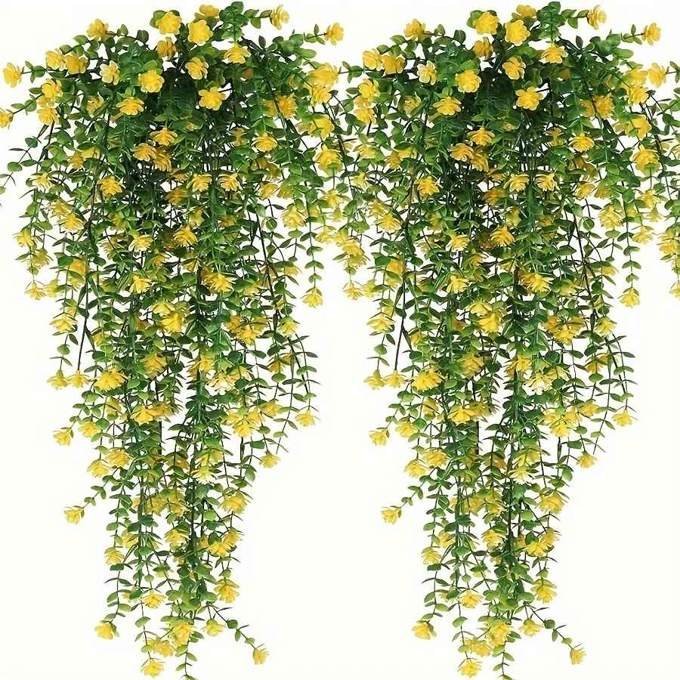
Autumn baskets look best in the season's own palette: bronze, russet, amber, deep purple, cream and dark green - the artificial flowering range covers stems in those tones for filling gaps.
The common mistake is planting a summer scheme in September - bright pinks and blues that looked right in June sit awkwardly against autumn light and falling leaves.
How many plants
Fewer than a summer basket, because autumn plants are chosen for structure rather than mass and they will not knit together the way summer bedding does.
Three or five well-chosen plants in a 35cm basket, with trailers at the rim, does more than a dozen crammed in - the planting guide covers quantities.
When to plant
September, while there is still warmth in the compost. Roots establish before the cold arrives, and the display settles in before it has to survive anything - the basket range covers what to plant it into.
Planting in November means putting plants into cold compost where they sit and do very little - the autumn baskets guide covers the changeover.
Watering from September
Much less than in summer, and the danger reverses - a waterlogged basket in a frost is a worse problem than a dry one.
Check by weight, make sure the basket drains freely, and stop watering on any schedule at all - the care guide covers the test.
Carrying it into winter
Choose well and you do not replant in November. Heucheras, ivy, winter pansies, skimmia and dwarf conifers all keep going, and the display simply gets quieter.
Add a few festive stems in December and it becomes a Christmas basket without starting again - the Christmas range covers those, and the winter plants guide covers the season.
Where to buy them
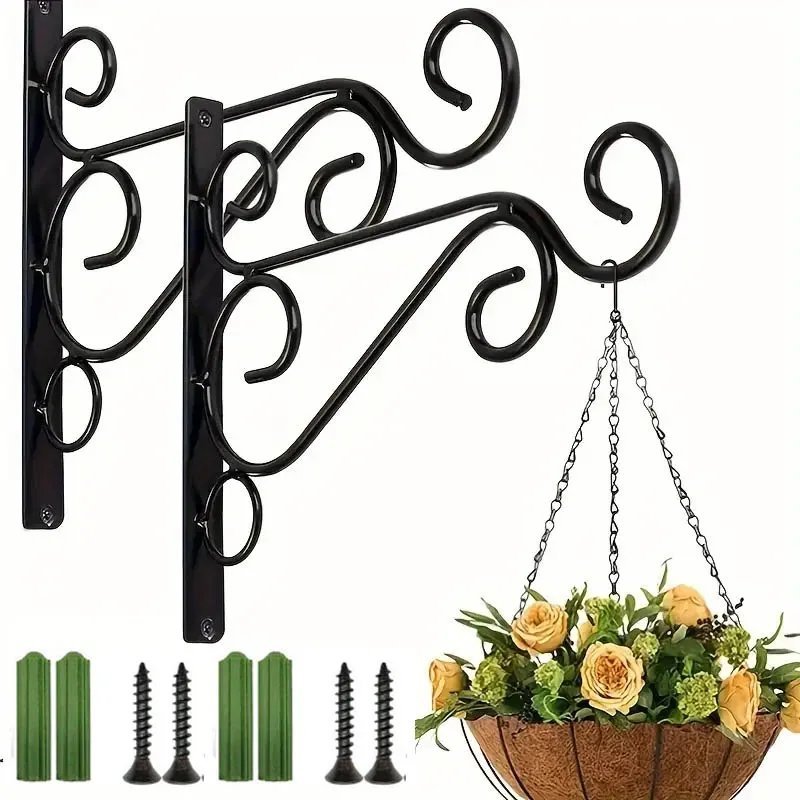
A nursery or garden centre - we do not sell live plants. We sell the basket, the liner and the bracket they hang from, plus artificial displays for spots too exposed for any of this - the basket range covers our side.
The short version
- Autumn reverses the summer priority - plant for foliage, treat flowers as a bonus.
- Heucheras are the backbone; one does more than half a dozen late flowers.
- Violas beat large-flowered pansies in an exposed spot, which marks in heavy rain.
- Birds strip berries fast, so berries should never be the whole display.
- Plant in September while the compost still holds warmth, not in November.
Frequently asked questions
What plants suit an autumn hanging basket?
Heucheras for foliage colour, small ornamental grasses for height and movement, cyclamen and winter pansies or violas for flower, trailing ivy at the rim, and skimmia or gaultheria for berries and structure.
Should I plant for flowers or foliage in autumn?
Foliage. Light levels drop and growth slows from September, so flowering becomes occasional. The plants that carry the display are the ones with leaves worth looking at, and flowers are a bonus.
When should I plant an autumn basket?
September, while there is still warmth in the compost, so roots establish before the cold. Planting in November puts plants into cold compost where they sit and do very little all season.
Will birds eat the berries?
Almost certainly, sometimes within days of the basket going up. That is either the point or a nuisance depending on your view, but it does mean berries should not be the entire display.
Do I need to replant for winter?
Not if the autumn planting was chosen well. Heucheras, ivy, winter pansies, skimmia and dwarf conifers all carry through - the display just gets quieter, and a few festive stems make it Christmas.