Quick answer: Winter baskets work on structure and foliage rather than flowers, with evergreens, ivy, small conifers and hardy bedding doing the work. Expect slower growth and much less watering, and accept that a winter basket is a quieter thing than a summer one.
A winter basket is a different proposition from a summer one, and the people who are disappointed are usually the ones expecting the same thing in December.
Winter baskets are about structure
In summer the flowers do the work. In winter there are far fewer of them, days are short, and growth is slow - so what carries a display is shape, foliage and evergreen colour.
That means planting for texture rather than for blooms: something upright, something trailing, something with a leaf you actually want to look at. A winter basket that leans on flowers alone looks thin by January.
What tends to hold up
Ivy, which trails, stays green and tolerates almost anything a British winter does.
Small evergreens and dwarf conifers for height in the middle.
Winter-flowering pansies and violas, which are the reliable flower and will keep going in mild spells.
Cyclamen for colour in a sheltered spot.
Heathers and skimmia for structure that lasts the whole season.
Buy these from a nursery or garden centre - we sell the basket, the liner and the bracket rather than the plants - the flowers guide covers choosing.
Position matters more in winter
A sheltered spot out of the worst wind makes a considerable difference, and so does anywhere that gets what winter sun there is.
A basket in an exposed corner facing north will struggle whatever you put in it, and that is worth knowing before you plant rather than after - it is also the situation where an artificial display is the sensible answer.
Watering in winter
Far less often, and the mistake now is overwatering rather than under.
Compost stays damp for much longer in the cold, growth is slow, and a waterlogged basket in frost is a worse problem than a dry one. Check by weight and water only when it is genuinely light - the care and watering guide covers the test.
Do not water when a hard frost is forecast, and make sure the basket can drain.
Frost
A basket is more exposed than a pot on the ground - the compost is surrounded by cold air on every side, so it freezes sooner and harder.
Moving a basket to a wall or under an overhang helps, and a wall that has had sun on it during the day holds a little warmth. Terracotta and some ceramics can crack in a hard frost; metal, plastic and resin do not.
Christmas displays
The one point in winter where baskets get genuinely festive - foliage, cones, berries and lights rather than flowers.
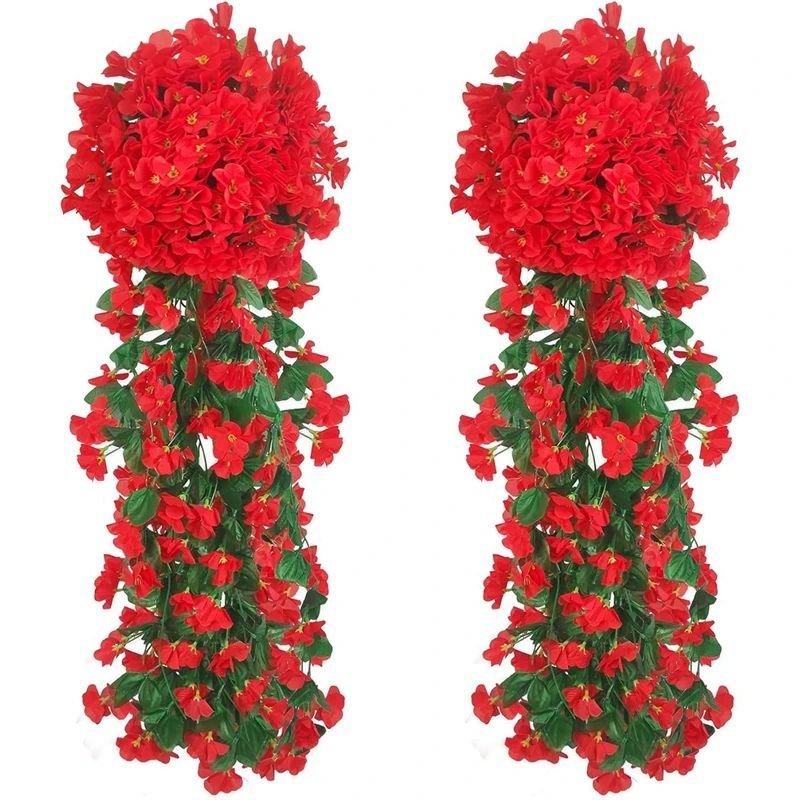
Artificial works particularly well here, because it looks the same on Christmas Day as it did in November and there is no watering in the cold - the Christmas range covers it, and the Christmas guide goes further.
The honest case for artificial
Winter is where faux displays make the most sense of any season, and it is worth saying plainly.
Short days, low light, frost and wind are hard on living plants, and the amount of display you get for the effort is at its lowest. An artificial basket looks full in February, needs no watering in the cold, and does not have to be replanted in spring.
The winter range and the artificial baskets cover it, and the artificial hanging baskets guide covers what survives the weather.
Mixing real and artificial
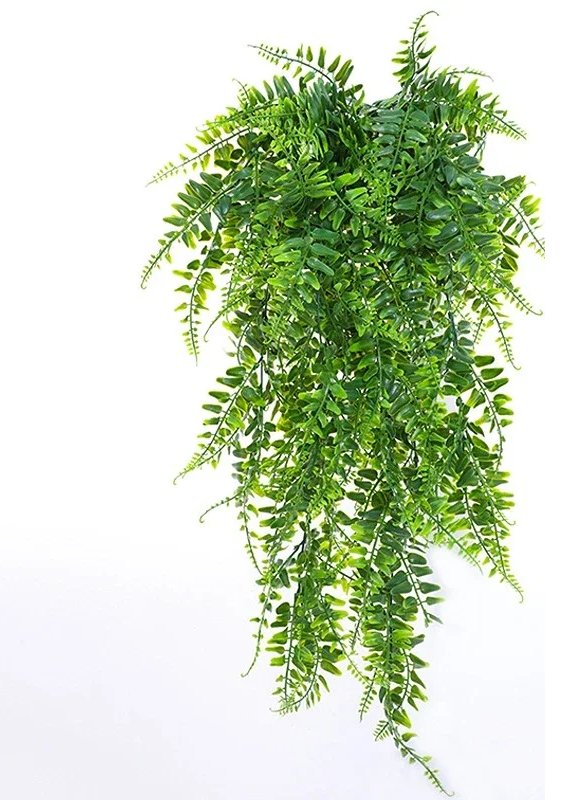
Perfectly reasonable and more common than people admit. A few evergreen plants with artificial stems worked in among them fills gaps without looking obviously fake, particularly at height where nobody is inspecting it closely.
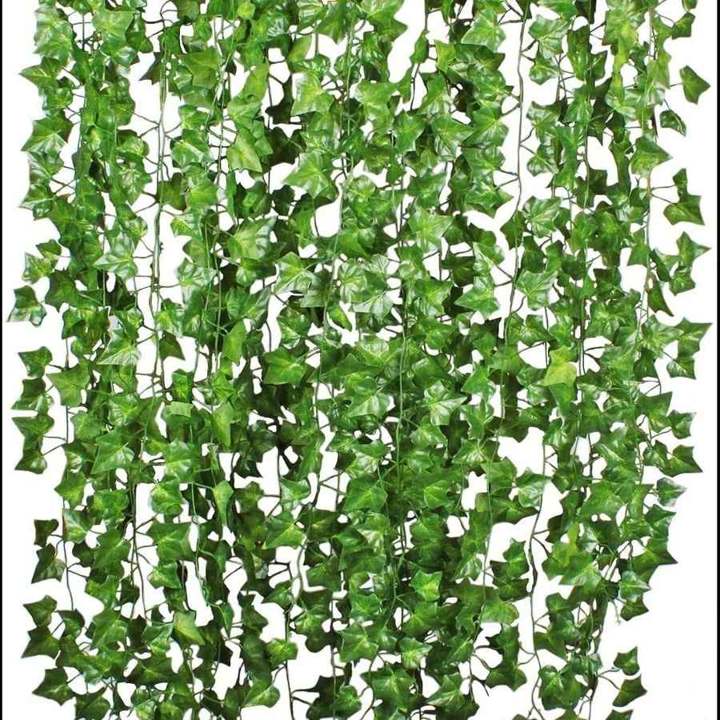
An ivy garland is the usual way in, because ivy is the one thing everybody expects to see trailing.
Lights and Christmas add-ons
Worth planning for rather than improvising in December.
Battery lights are the practical choice on a basket, because there is no cable to run and nothing to trip over. Check they are rated for outdoor use rather than assuming, and put the battery pack somewhere you can reach to change it without taking the basket down.
Wired lights mean a cable down a wall and an outdoor-rated socket, which is a bigger job than most people want for a hanging basket - the Christmas range covers the displays.
What to do in spring
Strip the basket, wash it, and check the bracket and fixings while it is down. A winter of weather is hard on a fixing, and the moment the basket is off the wall is the easiest time to look - the fixings guide covers what to check.
Then replant for summer - the planting guide covers the order.
The short version
- Winter baskets run on structure and foliage, not flowers - plant for texture.
- Ivy, dwarf conifers, winter pansies, cyclamen and heathers are the reliable core.
- The winter mistake is overwatering; compost stays damp far longer in the cold.
- A basket freezes harder than a pot because cold air surrounds it on every side.
- Winter is the season where artificial displays make the most sense of all.
Frequently asked questions
What plants work in a winter hanging basket?
Ivy for trailing, dwarf conifers or small evergreens for height, winter pansies and violas for flower, cyclamen in a sheltered spot, and heathers or skimmia for structure that lasts the season.
How often should I water in winter?
Far less often, and the risk now is overwatering. Compost stays damp much longer in the cold and growth is slow, so check by weight and water only when the basket is genuinely light.
Will frost damage a hanging basket?
A basket freezes sooner and harder than a pot because cold air surrounds it on every side. Moving it against a wall or under an overhang helps, and terracotta can crack where metal and plastic will not.
Are artificial baskets better in winter?
This is the season where the case is strongest. Short days, low light, frost and wind mean the least display for the most effort, and a faux basket looks full in February with no watering in the cold.
Can I mix real plants with artificial stems?
Yes, and more people do it than admit to it. A few evergreens with artificial stems worked in among them fills gaps convincingly, particularly at height where nobody inspects closely.