Quick answer: Most spinning comes from a swivel in the hanging point, long or uneven chains, or an open hook. Swap the swivel for a fixed ring or closed hook, shorten and level the chains, and tie the basket back or lift it down when a gale is forecast. In a very exposed spot, a fixed wall planter cannot swing at all.
A basket that turns on its chain every time the wind gets up is more than an annoyance. The trailing side ends up facing the wall, the plants on the windward side dry out first, and the constant twisting works on the hook and the bracket in a direction they were never meant to be loaded.
The good news is that spinning nearly always has a mechanical cause, and most of the fixes cost next to nothing.
Why a hanging basket spins
Four things cause nearly all of it:
- A swivel in the hanging point. Many hooks and chain sets include one on purpose so the basket can be turned for even light. In wind, it lets the basket rotate freely.
- Long chains. The longer the drop, the more the basket behaves like a pendulum and the more leverage the wind gets.
- Uneven chains. If one chain is a link shorter, the basket hangs at a slight tilt and the wind catches the high side.
- An open hook. A plain S-hook or an open bracket end lets the ring ride along the curve, so the basket both swings and turns.
Take the swivel out of the picture
If there is a swivel between the bracket and the chains, deal with that first. Either replace it with a fixed ring or a closed hook, or keep the swivel for summer and swap it out for the windy months.
A basket that no longer turns on its own can still be rotated by hand every week or so. That gives the plants even light without leaving the display free to spin.
Shorten the drop
Hang the basket as close to the bracket arm as the plants allow. Taking a few links out of each chain reduces the swing noticeably, and a basket sitting just below the arm hardly moves at all.
Leave enough clearance for the trailers and for watering, and make sure it still hangs clear of the wall - the bracket guide covers reach.
Level the chains
Stand the basket on a bucket, unhook it and hang each chain from the ring on its own. Count the links. They should match exactly, and the basket should sit dead level when it is rehung. A level basket presents the same face to the wind all the way round, so there is less for a gust to catch on one side.
Close the hook
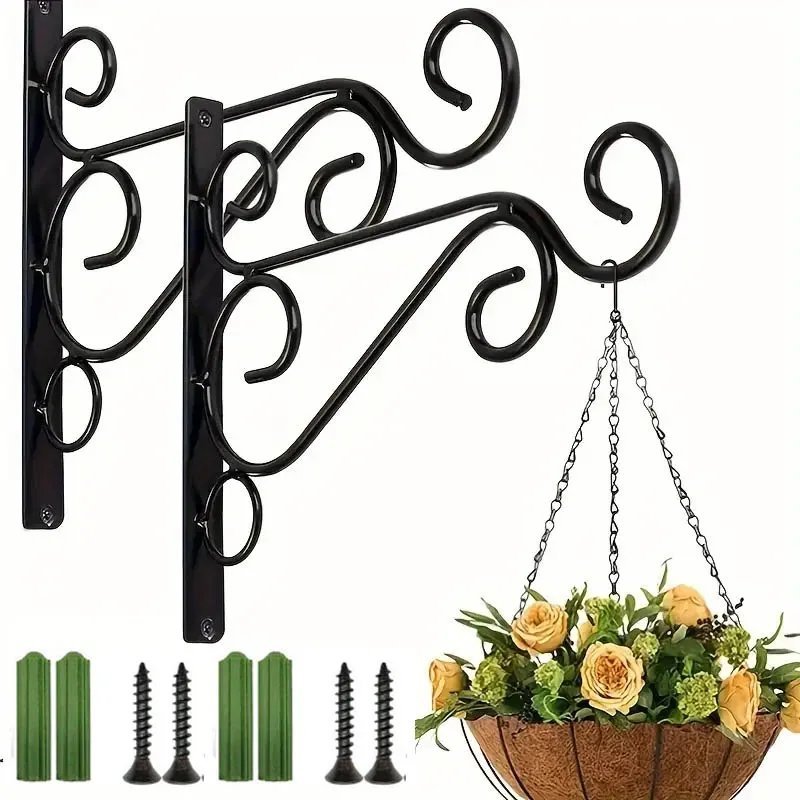
- Use a bracket whose arm ends in a closed loop or a deep notch, so the ring cannot slide along it.
- If you use an S-hook, squeeze the lower curve almost shut with pliers once the ring is on.
- Check the ring is a snug fit for the hook. A large ring on a thin hook rattles and turns.
Our brackets and hooks are the place to start if the current fitting is the problem.
Keep the weight up - within reason
A light basket moves more than a heavy one. Moist compost weighs far more than dry compost, so a basket that is watered properly also swings less than one that has been left to dry out.
Weight goes onto the fixing too, though, so never add ballast to a basket on a light bracket. The rule from the heavy-duty brackets guide applies: water it, let it drain, lift it, and check the bracket is rated comfortably above that.
Tie it back before a gale
When a windy spell is forecast, a simple tie is quicker than any adjustment:
- Loop soft garden twine or a plant tie through one chain, just above the rim of the basket.
- Run it back to a screw eye or to the bracket plate on the wall.
- Pull it just taut - enough to stop the basket rotating, not enough to drag it towards the wall.
Take the tie off afterwards so the plants on the wall side are not left in permanent shade.
Or lift it down
If a named storm is on the way, lift the basket off and stand it somewhere sheltered on the ground until it passes. It takes a minute and removes the risk entirely.
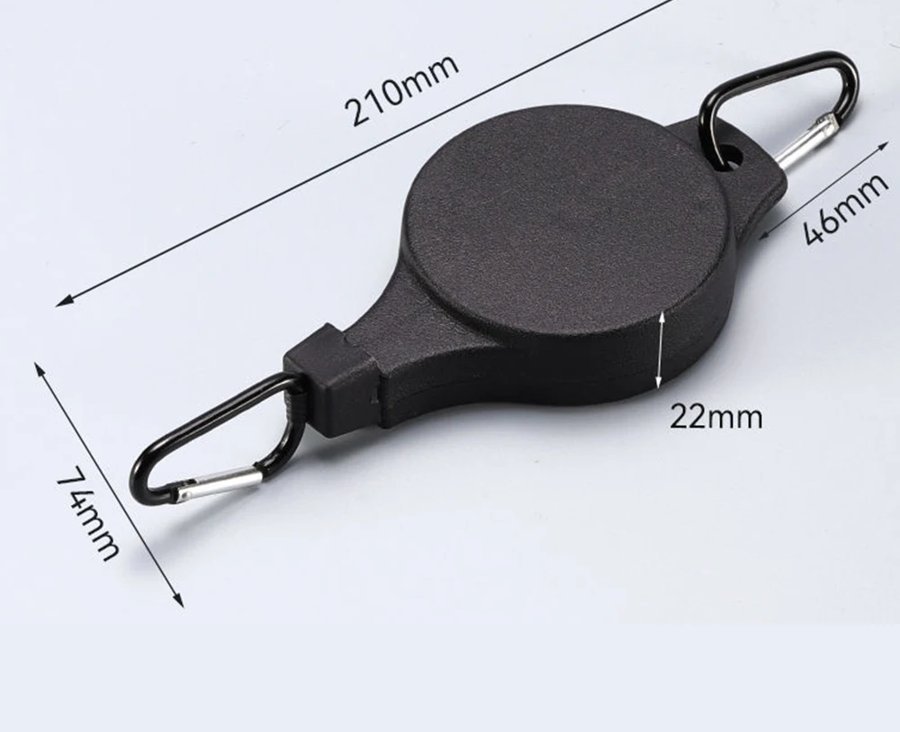
On a high bracket, a retractable pulley hook makes this far easier, because the basket comes down to you rather than you going up a ladder to it.
Rethink the position
Some spots are simply too exposed for a basket on a chain - the corner of a house, a high open balcony, a gable end facing the prevailing wind. In those places:
- Move the bracket to the more sheltered side of a porch or doorway.
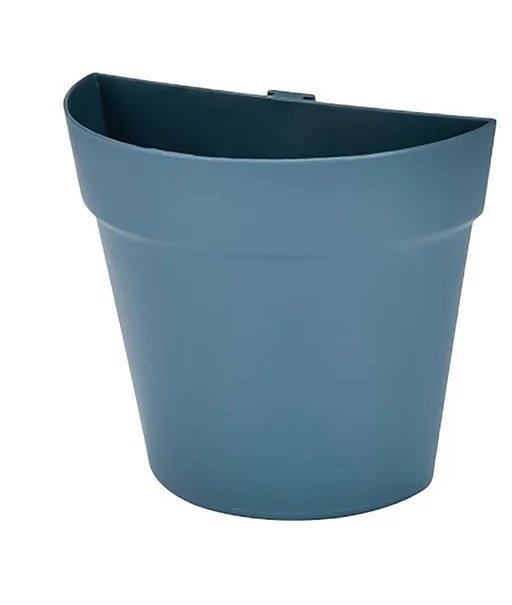
- Use a wall basket or planter, fixed flat to the wall so it cannot swing - the wall and fence range covers those.
- Use a stand on a patio, which puts the load into the ground rather than the wall - see basket stands.
Check the fixing after windy weather
Spinning and swinging both load a fixing sideways. After a rough spell, push and pull the bracket firmly, look for movement or cracked render around the plate, and check the chain links and ring for wear.
If anything has moved, take the basket down and refix the bracket before rehanging - the safe hanging guide covers what to look for, and the fixings guide covers wall types.
Artificial baskets in exposed spots
An artificial display weighs a fraction of a planted basket, so it puts much less strain on a bracket. For the same reason it swings more freely on a long chain. The same fixes apply: short, level chains, a closed hook and the most sheltered position you have.
On a genuinely exposed wall, a fixed wall planter filled with artificial trailing stems is often the tidiest answer of all, because nothing on it can swing.
The short version
- A swivel, long chains, uneven chains or an open hook cause nearly all spinning.
- Swap the swivel for a fixed ring or closed hook, and turn the basket by hand weekly instead.
- Shorter, level chains swing far less than a long drop.
- Tie the basket back to the wall, or lift it down, when a gale is forecast.
- Check the bracket after windy weather - swinging loads the fixing sideways.
Frequently asked questions
Why does my hanging basket keep spinning?
Usually a swivel in the hook or chain set, chains that are too long, chains of uneven length, or an open S-hook that lets the ring slide. Fix those four and most baskets stop turning.
Should I remove the swivel from my hanging basket hook?
In a windy spot, yes. Replace it with a fixed ring or a closed hook and turn the basket by hand every week or so, which still gives the plants even light.
Can wind pull a hanging basket bracket off the wall?
Constant swinging loads a fixing sideways and can work it loose over time, particularly a single-screw bracket or one fixed into render. Check the bracket firmly after any windy spell and refix it if it has moved.
Should I take my hanging baskets down in a storm?
For a named storm, or on a very exposed wall, yes. Lift the basket off and stand it somewhere sheltered until the wind drops. A pulley hook makes this easy on a high bracket.
What is the best hanging basket for a windy spot?
One that cannot swing: a wall basket or planter fixed flat to the wall, or a basket on a ground stand. If it has to hang, use short level chains, a closed hook and a heavy-duty bracket.
Do artificial hanging baskets blow about more?
They are much lighter, so they put less strain on the bracket but swing more easily on a long chain. Short chains, a closed hook and a sheltered position solve it.