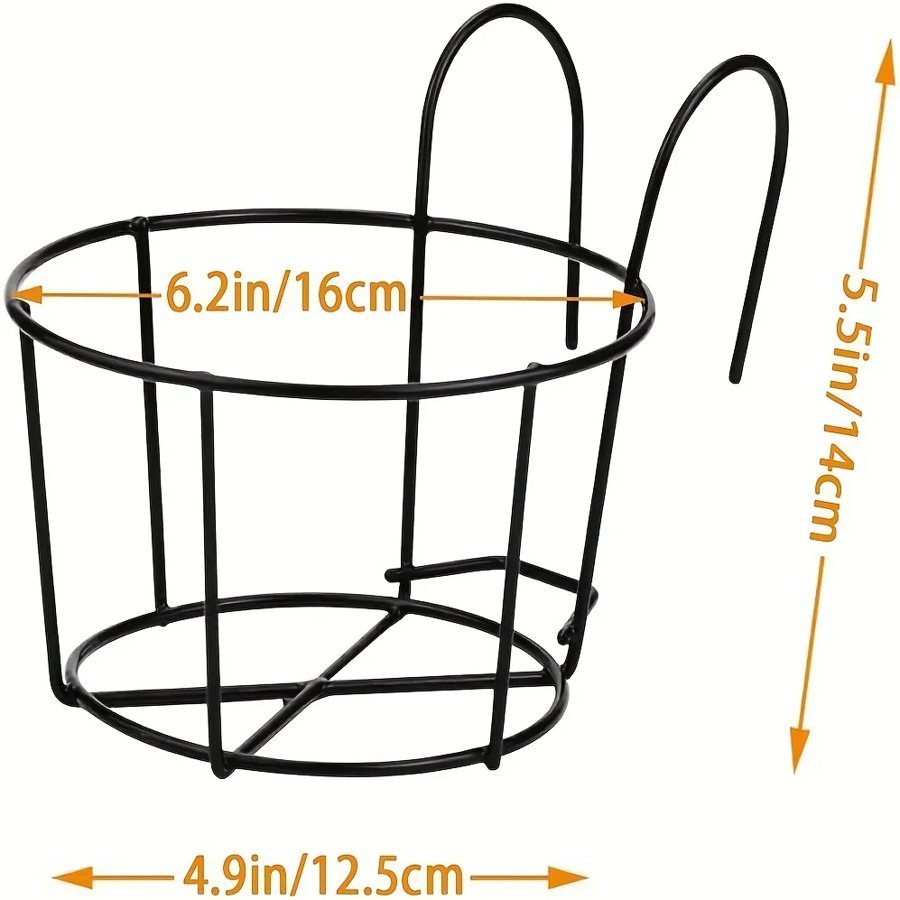
A basket stand holds a basket without drilling anything, which suits rented homes, patios, unknown walls and shared boundaries. Look for a wide base or ground spike, a reach that clears the diameter, and enough weight or anchoring to cope with wind.
The option people forget, and often the right answer when the wall is the problem rather than the basket.
What they are
A freestanding frame - a pole with an arm, a shepherd's crook, or a multi-arm tree - that takes the basket's weight into the ground or a weighted base rather than into a wall.
No drilling, no plugs, no fixing to something that may not be yours, which the wall fixing guide covers as the alternative - the stands range covers them.
Where they beat a bracket
Rented properties, where drilling may not be allowed.
Patios, decking and courtyards, with no suitable wall in reach.
Shared boundaries, where the fence is not yours to fix into.
Doubtful walls - render, cladding, or anything you cannot identify.
Anywhere you want to move it, seasonally or for a party.
Where a bracket still wins
Height, mainly. A stand puts a basket at a fixed and fairly modest height, where a bracket can put one above a doorway or under a soffit.
Brackets also take up no ground space, which matters on a small patio, and the brackets range covers them - the brackets guide covers those.
The three types
Ground-spike stands push into soil and are the most stable of all, provided the ground is soft enough and stays soft - the basket range covers what goes on them.
Weighted-base stands stand on a hard surface and rely on the base for stability.
Multi-arm trees hold two, three or more baskets from one upright, which is the most efficient use of one footprint.
Stability is the whole question
A basket on a stand is a weight at the top of a lever, and wind pushes on it.
For ground spikes, depth is what matters - push it in far enough that the spike is fully buried, and re-check after heavy rain when soil softens.
For weighted bases, the base must be wide enough and heavy enough. Many can take a paving slab or a bag of gravel on the base plate, which is the cheapest stability upgrade available.
Reach and balance
The arm has to hold the basket clear of the upright, and the further out it reaches the more it wants to tip.
Look for a reach that comfortably clears the basket diameter and a base that extends in the direction of the arm, not just around the pole.
Multi-arm trees and load
Attractive because one footprint carries several baskets, but the arms are rarely at the same height and the loads are not balanced.
Hang the heaviest basket on the lowest arm, and if the arms are on one side only, weight the base on the opposite side.
Height
Most stands put a basket somewhere between waist and head height, which is genuinely useful - it is easy to water, easy to deadhead and seen from in front rather than from below.
That also means the planting reads differently. Trailing length matters less and the top of the display matters more.
Planting for a stand
Because a stand basket is seen from above and from the side rather than only from below, the top of the display needs to earn its place.
More mounding plants, slightly fewer long trailers, and a centrepiece that looks good from above, which the trailing plants guide covers - the planting guide covers the arrangement.
On grass
Ground spikes work well until you want to mow. Site them out of the mowing line, at the edge of a border, or accept the trimming job around them.
Soft ground after prolonged rain is the other consideration - a spike that was solid in May can lean by November.
On decking and paving
A weighted base only, and be honest about wind exposure. Decking is often the most exposed part of a garden.
A slab on the base plate, or a heavy pot placed on it, converts a wobbly stand into a stable one for nothing.
Rust and finish
The base is where a stand fails, because it sits in wet soil or standing water on a patio.
Powder-coated and galvanised finishes last considerably longer. Standing a base on a slab rather than in soil extends its life a great deal - the hooks range faces exactly the same weather.
Bringing them in for winter
Not essential for a metal stand, but worth it for anything decorative, and it means the spike hole does not gradually widen through frost heave.
The winter range covers storing seasonal displays.
Artificial on a stand
A particularly good pairing. An artificial display is light, which is the main enemy of stand stability, so weight the base - but it needs no watering, which is what makes a stand in an awkward corner practical all year.
The artificial range covers those, with free UK delivery over £20.
The short version
- A stand needs no fixing at all, which is the answer for rented or shared walls.
- Ground spikes are most stable; weighted bases need real weight on the plate.
- A paving slab on the base plate is the cheapest stability upgrade available.
- Hang the heaviest basket on the lowest arm of a multi-arm tree.
- A stand basket is seen from above, so the top of the display matters more.
Frequently asked questions
What is a hanging basket stand for?
It takes the basket's weight into the ground or a weighted base rather than into a wall, so nothing needs drilling. That suits rented homes, patios, shared boundaries and walls you cannot identify.
How do I stop a stand blowing over?
For a ground spike, push it fully in and re-check after heavy rain when the soil softens. For a weighted base, put a paving slab or a bag of gravel on the base plate - it costs nothing and works.
Are multi-arm stands a good idea?
They use one footprint efficiently, but the arms are rarely at the same height and the loads are not balanced. Hang the heaviest basket on the lowest arm and weight the base opposite the arms.
Can I use a stand on decking?
Yes, with a weighted base rather than a spike - and be honest about exposure, since decking is often the windiest part of a garden. A slab or heavy pot on the base plate makes it stable.
Should I plant a stand basket differently?
Slightly. It is seen from above and from the side rather than from below, so use more mounding plants, slightly fewer long trailers, and a centrepiece that looks good looking down on it.