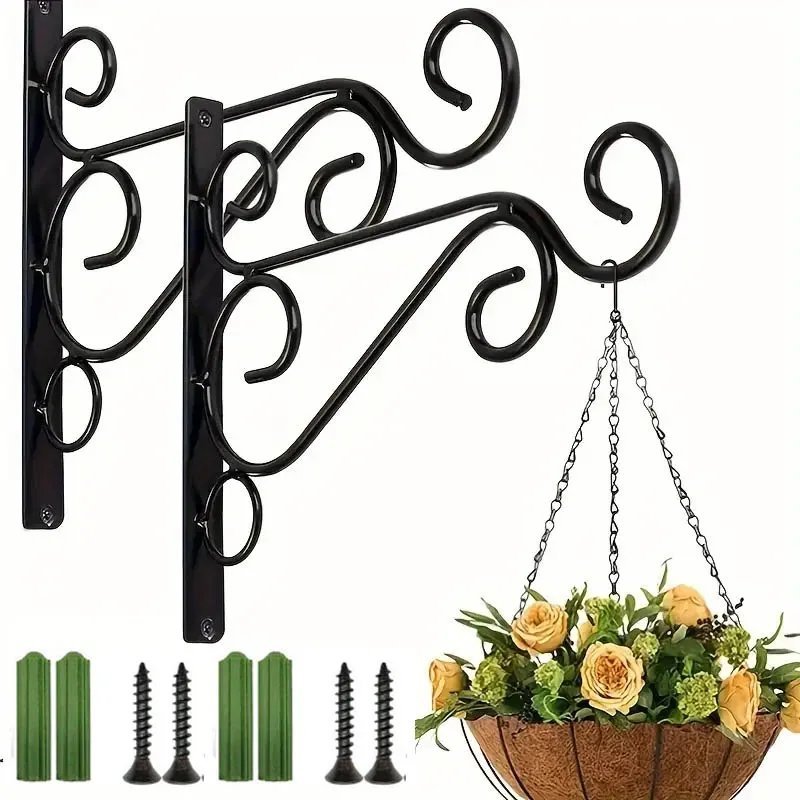
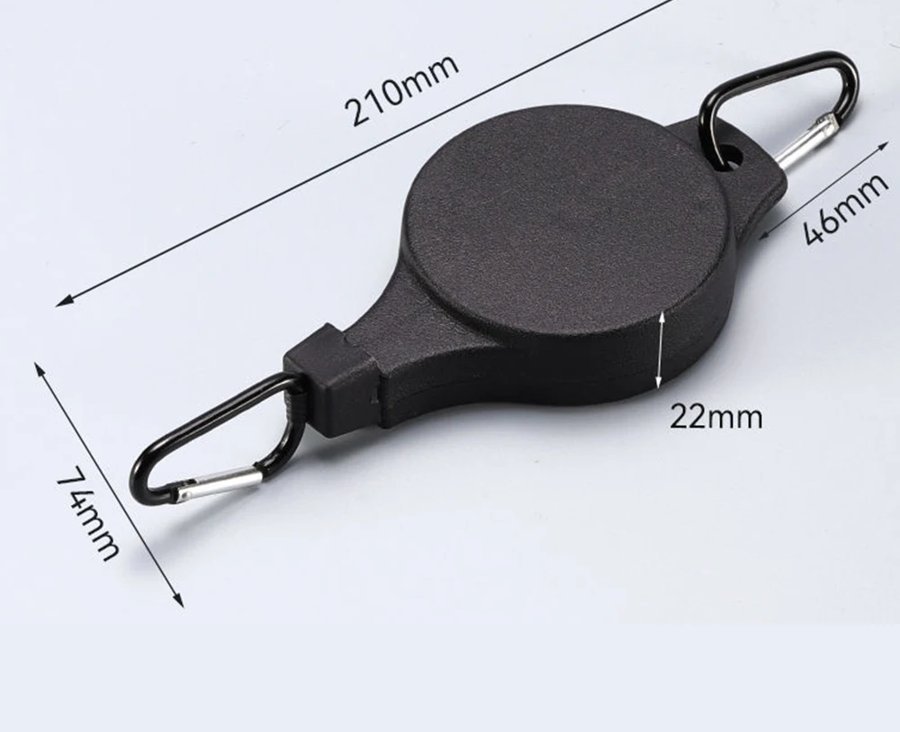
Choose a screw hook for timber, a hook with a wall plate for masonry, and a closing or deep-throat hook anywhere windy so the basket cannot lift off. For a high basket, a rise-and-fall pulley hook is worth more than any other hardware upgrade.
The cheapest part of the whole arrangement and the part that fails most often, usually because the wrong type went into the wrong surface.
Screw hooks
A single threaded shank with a hook on the end, driven directly into timber.
Right for: joists, beams, pergolas, fence posts, timber porches - anywhere there is solid wood to bite into.
Wrong for: masonry with a plug, where the thread grips the plug rather than the wall and works loose under a swinging load.
Hooks with a wall plate
A hook on a small plate with two or three fixing holes, screwed to a wall.
Right for: masonry, render and anywhere the load needs spreading over more than one point.
Two or three fixings stop the hook rotating under weight, which is what works a single fixing loose over a season - the hooks range covers them.
Ceiling hooks
For porches, pergolas, conservatories and indoor ceilings, where the load pulls straight down rather than out.
Straight-down loading is the easiest case mechanically, but only if the hook goes into a joist. Into plasterboard alone, nothing holds a watered basket - find the joist, or use a proper cavity fixing rated for the load. The indoor range covers what hangs from them inside.
Closing and deep-throat hooks
The type most people should be buying outdoors and mostly are not.
A shallow open hook lets a basket lift off in a gale, especially a light artificial one. A deep throat, or a hook with a screw-gate that closes, makes that impossible.
It costs very little more and it is the difference between a basket that stays up all winter and one you find in the neighbour's garden.
Pulley and rise-and-fall hooks
The genuine upgrade for a high basket.
The basket lowers to chest height for watering, feeding and deadheading, then locks back up. It turns a basket you neglect because you cannot reach it into one you actually maintain.
Check the rated load against a watered basket, since the mechanism carries it all - the watering systems guide covers the alternatives.
Over-door and no-drill hooks
Worth knowing about for rented properties and anywhere you cannot drill.
They hook over a door top or a fence rail and hold light loads only. A full watered basket is usually beyond them, but an artificial display is well within - which makes the pairing a genuinely useful one - the artificial range covers those.
Hook versus bracket
A hook needs something above the basket - a beam, a ceiling, a pergola. A bracket creates that overhang where there is only a vertical wall.
If you have an overhead structure, a hook is simpler, cheaper and stronger. If you have a flat wall, you need a bracket, or a freestanding stand that avoids the question entirely - the brackets guide covers those.
Rated load
The number to check, and to check honestly. Water the basket, let it drain, lift it - that is the load.
Choose a hook rated comfortably above it rather than at it, because a rating is a maximum under ideal conditions and a basket in wind is not ideal conditions.
Finish and rust
A hook lives outdoors with a wet basket dripping on it, which is a hard life for steel.
Galvanised and powder-coated last far longer than painted or bare, which the brackets guide covers too. Rust starts where the coating is scratched during fitting, so a dab of paint over a scratch is worth the minute - the chains range faces the same weather.
Fitting into timber
Drill a pilot hole slightly narrower than the shank. Driving a screw hook into hardwood without one splits the timber and the split is what fails later.
Screw it in until the shank is fully seated and the hook faces the way you want, and stop - overtightening strips the thread in the wood.
Fitting into masonry
Into brick rather than mortar joints where possible, with the right plug size for the fixing, drilled deep enough that the plug sits fully below the surface.
Blow the dust out before inserting the plug - dust is what stops a plug gripping properly - the fixings guide covers wall types.
Height and clearance
Hang it so you can reach the compost with a can, and so nobody walks into it. Remember trailing growth adds length through the season - what clears your head in May may not in August.
The hanging guide covers the safety side.
Check it once a year
Push and pull the hook firmly with the basket off. Any movement, any cracking around the fixing, any rust at the base - deal with it before the season rather than after a failure.
A hook costs very little; a watered basket coming down above a doorway does not - free UK delivery over £20 and 30 days to return anything.
The short version
- Screw hooks into timber, plated hooks into masonry - swapping them is the usual failure.
- A deep-throat or closing hook is what stops a basket lifting off in a gale.
- Nothing holds a watered basket in plasterboard alone - find the joist.
- A rise-and-fall pulley turns an unreachable basket into a maintained one.
- Drill a pilot hole in timber; the split from not doing so is what fails later.
Frequently asked questions
What hook should I use for a hanging basket?
A screw hook driven into solid timber, or a hook on a plate with two or three fixings for masonry. Anywhere windy, choose a deep-throat or closing hook so the basket cannot lift off.
Can I screw a hook into a plasterboard ceiling?
Not into plasterboard alone - nothing holds a watered basket there. Find the joist and screw into that, or use a cavity fixing genuinely rated for the load you worked out.
Why did my basket blow off the hook?
Almost certainly a shallow open hook. A gale swings a basket far enough to lift the chain out, especially a light artificial one. A deep throat or a screw-gate hook makes it impossible.
Is a pulley hook worth it?
For a high basket, more than any other hardware upgrade. It lowers the basket to chest height for watering, feeding and deadheading, which turns a basket you neglect into one you maintain.
Do I need a hook or a bracket?
A hook if you have something overhead - a beam, a joist, a pergola. A bracket if you only have a flat wall, since its job is creating the overhang a hook needs and does not have.