Fix to posts and rails, never to thin panel boards, and choose a flat-backed wall basket rather than a bracket so nothing swings. On a shared or rented boundary, use over-panel hooks or a freestanding stand instead of drilling anything.
A fence is the most tempting place to hang a basket and the one that fails most often, for reasons that are entirely predictable.
Why fences are difficult
A fence panel is thin, held at the edges, and designed to resist wind rather than carry weight.
Hang a watered basket off a bracket on a panel and you have a lever working on flexible material every time the wind blows. The fixing loosens, the board splits, or the panel bows.
Fix to the post, not the panel
The rule that solves most of it.
Posts are solid, set in the ground and designed to take load. Rails are the next best thing. Panel boards and thin cladding are the parts that fail - the brackets range covers what to use where there is masonry instead.
If the basket has to go where there is no post, move the basket - the fixings guide covers timber properly.
Flat-backed rather than bracketed
The second rule. A wall basket fixes flush to the timber with the load close in, and it does not swing.
A bracket holds the basket out on an arm, and that arm multiplies the pull on a fixing that is already in flexible material - the wall and fence range covers flat-backed options.
Screws into timber
Long screws directly into solid wood, no plugs, with a pilot hole slightly narrower than the shank.
Skipping the pilot hole splits the timber, and the split is what fails a season later. Screw until seated and stop - overtightening strips the thread in the wood.
Keep it small
A fence will happily carry a small basket and struggle with a large watered one.
Two or three small baskets spread along a fence put far less load into any single fixing than one big one, and they look better along a run anyway - the small basket range covers those.
Shared boundaries
Worth thinking about before drilling. A boundary fence may not be yours to fix into, and screws through a panel are visible from the other side.
Where ownership is unclear or the fence is a neighbour's, the no-drill options below are the sensible route.
No-drill options
Over-panel hooks hang over the top of a fence panel and take light loads.
Rail planters hook over a top rail or balcony rail with no fixings at all.
Freestanding stands avoid the fence entirely and can be moved - the stands range covers them.
All three carry less than a screwed fixing, which suits small baskets and artificial displays.
Trellis as a load spreader
A useful middle route. Fix a trellis panel to the posts, then hang from the trellis rather than from the fence boards.
The trellis spreads the load across both posts and gives more places to hang from, which turns a difficult fence into an easy one.
Wind
Fences are exposed by definition, and a basket on a boundary catches more wind than one against a house wall.
That argues for flat-backed baskets, small sizes and deep or closing hooks on anything that hangs - the hooks range covers those.
Watering, and the wall behind
Water running down timber keeps it permanently damp, which shortens the life of a fence considerably.
Use a solid liner rather than an open back, water gently at the front rather than flooding, and accept some staining on treated timber - the liners range covers liners.
They dry out fast
A half-basket holds around half the compost of a round one, a fence is usually exposed, and timber reflects heat on a sunny boundary.
Expect to water more often than a house-wall basket, and mix water-retaining granules in at planting - the watering guide covers the frequency.
Planting a fence basket
One-sided, so height at the back, filler through the middle and trailers along the front edge only.
Nothing trailing at the back, since it presses against the timber and holds damp there - the wall and fence planting guide covers schemes.
Spacing a run
Set the heights off a fence rail rather than measuring up from the ground, which follows the slope of the garden and is rarely level.
Space them so the planting will just meet at maturity, and plant them identically - repetition is what reads as designed.
Artificial on a fence
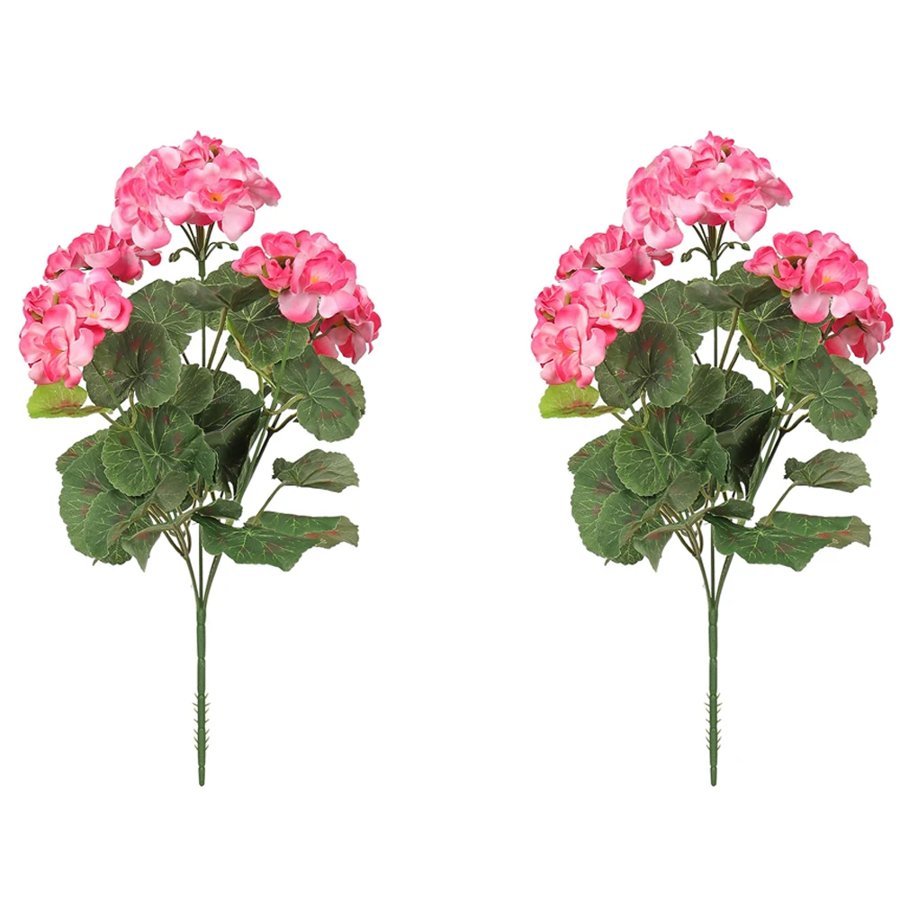
The best case for it. No watering means no damp timber, no staining and no weight beyond the display itself - which on a panel that cannot take much is exactly the point.
The artificial range covers them, with free UK delivery over £20.
The short version
- Fix to posts and rails; panel boards and thin cladding are what fail.
- Choose a flat-backed basket over a bracket so nothing swings on flexible timber.
- Two or three small baskets load a fence far less than one large watered one.
- A trellis fixed to the posts spreads the load and turns a hard fence into an easy one.
- On a shared or rented boundary, use over-panel hooks or a stand instead of drilling.
Frequently asked questions
Can I hang a basket on a fence?
Yes, if you fix into a post or a rail rather than the thin panel boards, and if you use a flat-backed wall basket rather than a bracket so there is nothing swinging on flexible timber.
Why do fence fixings fail?
Because a panel is thin, held only at the edges and designed to resist wind rather than carry weight. A bracket turns every gust into a lever working on that flexible material.
What if the fence is not mine?
Use a no-drill option - over-panel hooks, a rail planter, or a freestanding stand that avoids the fence entirely. Screws through a panel are visible from the other side and may not be yours to make.
How do I hang more than one or two?
Fix a trellis panel to the posts and hang from the trellis rather than the boards. It spreads the load across both posts and gives many more places to hang from.
Will it damage the fence?
Water running down timber keeps it permanently damp, which shortens its life. Use a solid liner rather than an open back and water gently at the front, or use an artificial display and avoid it entirely.